
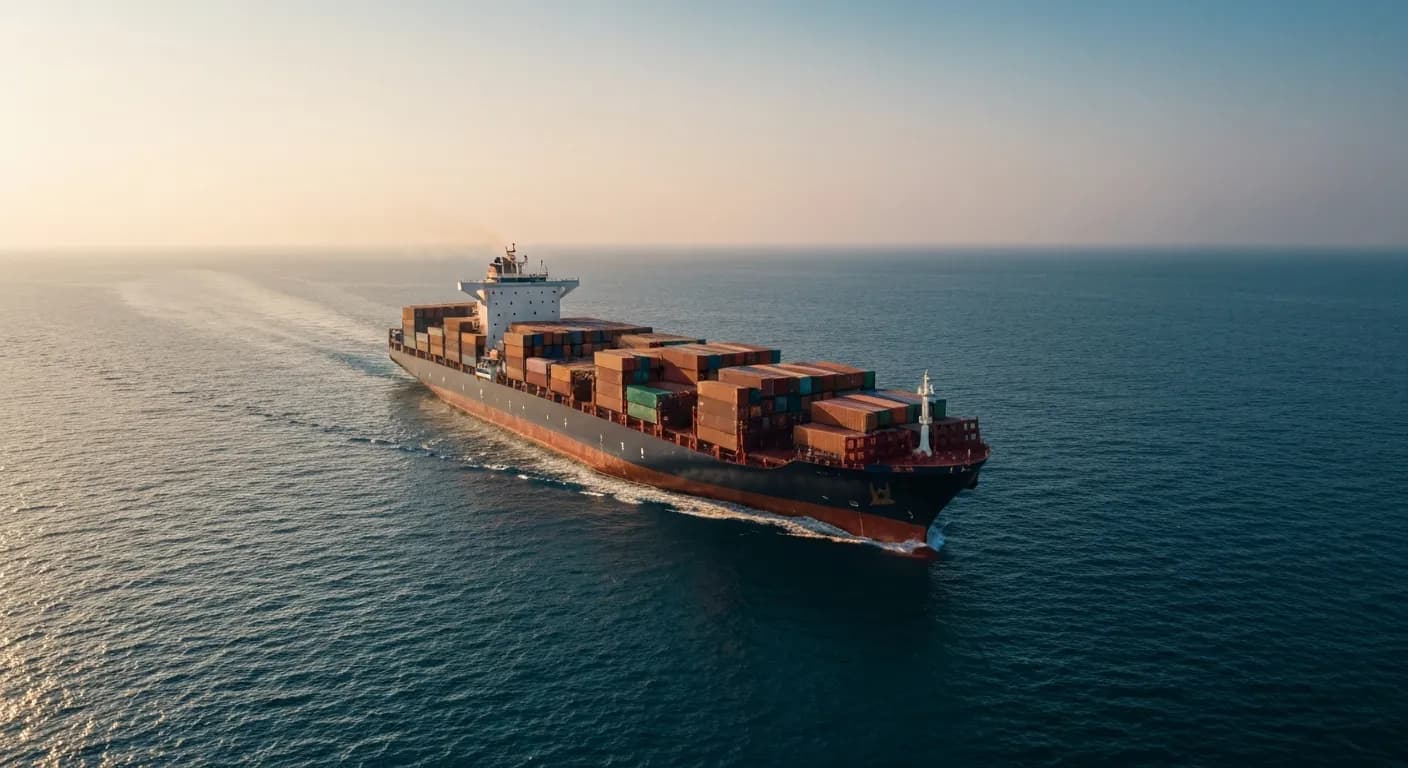
Ocean freight costs are once again commanding attention across food supply chains serving West Africa and the Gulf. After a brief period of relative calm in early 2026, spot rates have climbed sharply, and a cluster of near-term triggers means the pressure is unlikely to ease before July. For importers of dairy products, canned goods and staple foodstuffs, understanding what is driving this move — and where rates may head next — is essential for procurement planning.
A Sharp Rate Spike Heading Into Peak Season

The Drewry World Container Index (WCI) stood at $3,969 per 40ft container as of 18 June 2026, reflecting a 12% week-on-week jump. This follows a 23% surge on 4 June as peak season volumes kicked in, and a further 3% rise the following week. Cumulatively, rates have risen approximately 37% over six weeks from their late-May levels — a steep and rapid move that mirrors the kind of volatility food importers experienced during the post-pandemic freight cycle.
This is not purely a seasonal phenomenon. Carriers including Hapag-Lloyd and Maersk have imposed Peak Season Surcharges (PSS) on Asia–Europe lanes ranging from $300–$500 per 20ft container and $600–$1,000 per 40ft container, effective from 8–10 June. Maersk has gone further on Transpacific routes, announcing a PSS of $1,000 per 20ft and $2,000 per 40ft effective 17 June. These surcharges flow through to all connected trades, including those feeding West African and Gulf ports.
Adding to the urgency, a bunker fuel adjustment is expected on 1 July, prompting buyers to pull shipments forward into June — compressing available space and further supporting spot rates. Fuel surcharges have already added an estimated 15–25% to freight costs through 2025 due to oil price volatility.
Red Sea Disruption: Unresolved and Costly

The single most consequential structural factor for Africa and Gulf trade lanes remains the Red Sea security situation. Houthi attacks have forced the majority of container traffic to reroute via the Cape of Good Hope, adding significant voyage time and operating cost. General Rate Increases (GRIs) and emergency bunker surcharges associated with Cape diversions have historically added $500–$3,000 per container at short notice.
Maersk completed two successful transits through the Red Sea — its first since the attacks began — prompting analysts to monitor whether a gradual normalisation is underway. Drewry has launched a dedicated Red Sea Diversion Tracker, updated fortnightly, to measure the shift in traffic between Suez and Cape routing. However, a full resumption of Suez transits is far from guaranteed, and the cost premium of the longer Cape route continues to affect pricing for shipments moving from Asia into both the Gulf and West Africa.
For context, 20ft container rates to Africa were quoted across a wide $1,500–$6,000 range in 2025, a spread that reflects destination variation, cargo type and the unpredictable layering of surcharges. Buyers operating on fixed landed-cost models have found this environment particularly difficult to navigate.
Capacity Growth Offers a Medium-Term Buffer
Not all signals point upward. The global container fleet is forecast to expand by 1.4 million TEU in 2026, equivalent to approximately 5% of total capacity, with 70–80% of new vessels earmarked for secondary trade lanes including Africa — where import demand is growing at an estimated 10–15% annually. This structural capacity addition is a meaningful counterweight to short-term rate pressure.
Carriers are aware of this and are actively managing supply: approximately 39 blank sailings were scheduled across major East–West trades between mid-June and mid-July, representing roughly 5.5% of planned departures. This deliberate capacity withdrawal helps defend rate levels in the near term, but it cannot fully offset the long-term impact of newbuild deliveries.
Xeneta's chief analyst has warned that freight rates could fall as much as 25% globally in 2026 if conditions evolve as expected — and an HSBC analyst has similarly flagged that a faster return of Suez transits could trigger an additional 10% rate drop, putting major carriers under financial pressure.
Takeaway for Food Importers and Distributors
The immediate picture is one of elevated and rising costs, with the 1 July bunker revision and ongoing Red Sea uncertainty as the most pressing near-term risks. For buyers managing food import programmes into West Africa or the Gulf — whether for dairy products, staple grains or canned goods — the priority should be clarity on current surcharge exposure and early engagement with freight partners on post-July rate structures. At the same time, the medium-term trajectory of new vessel capacity and potential Suez normalisation suggests that locking in long-term rates at today's peak may not be optimal. Timing and flexibility in procurement will be the defining advantage over the second half of 2026.
Sources
- How Much Does It Cost to Ship to Africa? 2025 Guide
- 5 Key Factors of Container Costs in 2026: Pay $2,200 or $9,500? | SeaRates Blog
- Ocean Freight Rates in 2026: Current Prices, Surcharges, and How to Save - ExFreight
- Container Shipping Overcapacity & Rate Outlook 2026
- International Container Shipping Rates Chart: April 2026
- Container Shipping Forecast 2026: Rates, Routes and Risks
- Moving Overseas Shipping Container Costs 2026 | Cost Guide
- What 2025 Means for 2026: Ocean and Air Freight Forecast | Freightos Ocean & Air Freight Forecast 2026: What to Expect
This article is market commentary prepared by the Dairy Land Research Team for general information only and does not constitute commercial, financial or trading advice.