
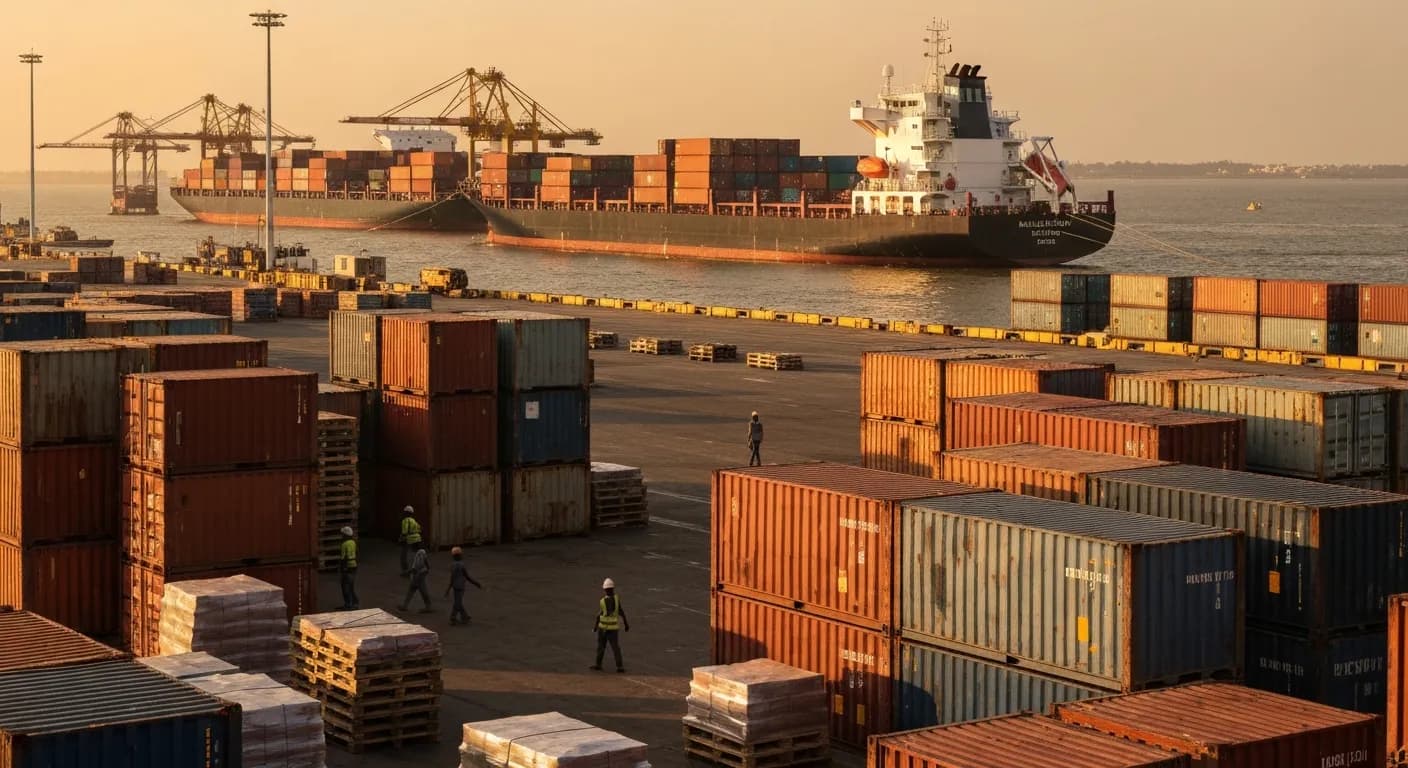
West Africa is undergoing one of the most consequential demographic and dietary shifts of any emerging market region. Population growth, accelerating urbanisation, and widening gaps between local production capacity and consumer demand are combining to create a structurally import-dependent food market — one that rewards reliable, price-competitive suppliers of processed dairy, grains, canned goods and cooking oil.
A Demographic Engine Too Large to Ignore

The numbers behind West Africa's demand story are striking. The ECOWAS region's population grew 118% between 1990 and 2019, reaching roughly 393 million, with Nigeria — at approximately 203 million people — accounting for more than half. Crucially, it is not just population growth but urbanisation that is driving food-import demand. By 2043, more than 57% of the ECOWAS population is projected to live in urban centres, above the African average. Urban food demand across the region is expected to grow two to four times faster than rural demand, depending on the commodity.
Côte d'Ivoire illustrates the dynamic clearly. With a population of around 31.9 million growing at 2.13% per year and 60% of its people under the age of 25, the country's appetite for packaged and processed food is expanding rapidly. The country's retail sector more than tripled in a single year — from $2.1 billion in 2022 to $6.6 billion in 2023 — and over 35% of Ivoirians now shop in supermarkets. Food imports for the first five months of 2025 alone reached $1.8 billion, up 26% year-on-year.
Dairy: Structural Import Dependency Is the Baseline

For dairy specifically, the import dependency is not a temporary gap — it is the market structure. According to FAO's November 2025 Africa Food Security Report, approximately 80% of Africa's dairy consumption growth is being met by imported products and reconstituted powders, not expanded local production. In Nigeria, imports cover more than 75% of the country's dairy needs. The cold-chain investment required to close that gap has been estimated at $50–100 billion — far beyond current commitments — while only 1–7% of locally produced milk in West Africa enters formal trade channels.
Ghana leads the West Africa dairy market in terms of demand sophistication, followed by Nigeria and Côte d'Ivoire. Senegal, representing approximately 5% of African dairy import demand, is an important Francophone market in its own right. Across the region, demand for infant formula and fortified dairy products is rising as middle- and upper-income urban consumers increase their purchasing of packaged nutrition through expanding supermarket networks. For evaporated milk, condensed milk and milk powder — shelf-stable, easy to transport and affordable at scale — the structural case for import volumes is durable.
Currency Pressures: A Double-Edged Dynamic
No analysis of West African import markets is complete without addressing currency risk. Nigeria's annual average inflation reached 31% in 2024, driven by naira depreciation, energy subsidy removal and food supply shortfalls. By Q1 2025, inflation had eased to 24% year-on-year following partial naira stabilisation, according to IMF data. Ghana's cedi declined more than 55% against the US dollar between January and October 2022, a trajectory that has continued to weigh on import financing costs, with some Ghanaian buyers facing restricted access to foreign exchange.
For suppliers sourcing from a UAE hub, this creates a nuanced advantage. Currency weakness inflates landed costs for importers and compresses margins — but it simultaneously strengthens demand for affordable shelf-stable processed foods as consumers and households substitute away from fresh perishables. Evaporated milk, canned fish, tomato paste and cooking oil all benefit from this substitution effect. The UAE's position as a well-connected re-export hub, with competitive freight access to West African ports, helps offset some of the cost pressure that buyers face.
Grains, Oils and the Broadening Import Basket
Beyond dairy, the import opportunity across West Africa spans a wider food basket. African rice imports rose nearly 29% over the past decade to 17.64 million tonnes in 2024, with an import bill of $9.1 billion — and the OECD-FAO Agricultural Outlook projects a further 53% growth in African rice imports over 2025–2034. Nigeria, Senegal and Côte d'Ivoire rank among Africa's three largest rice importers. Côte d'Ivoire alone imports 1.25 million metric tonnes of rice per year, ranking fifth globally, alongside significant volumes of wheat, corn, soybean meal and vegetable oil. West Africa's production-demand imbalances are growing fastest for high income-elasticity foods: dairy, meat, seafood, vegetable oils and fruits and vegetables.
Takeaway for Buyers and Trade Partners
The West African food import market is not a cyclical opportunity — it reflects a structural realignment of diet, demographics and supply capacity that will deepen over the next decade. For distributors and importers in Nigeria, Ghana, Côte d'Ivoire and Senegal, the priorities are clear: reliable access to shelf-stable processed dairy, affordable staple grains, cooking oil and ambient canned goods from suppliers who can offer consistent quality, competitive pricing and dependable logistics from a well-positioned trade hub. Those conditions define the supply profile that buyers across the region are actively seeking.
Sources
- (2026) Export to Africa: Top Food Products with High Demand
- West Africa Dairy Market Report – Industry Trends and Forecast to 2028 | Data Bridge Market Research
- Projected demand and supply for various foods in West Africa: Implications for investments and food policy - ScienceDirect
- Why African Dairy's $74B Boom Bypasses Local Farmers – And What It Means for Global Markets
- Full article: Origin and dairy consumption in West Africa: A cross-cultural analysis of consumer behaviour
- Dairy: World Markets and Trade
- Projected demand and supply for various foods in West Africa: Implications for investments and food policy
- Ghana (GHA) Exports, Imports, and Trade Partners
This article is market commentary prepared by the Dairy Land Research Team for general information only and does not constitute commercial, financial or trading advice.