
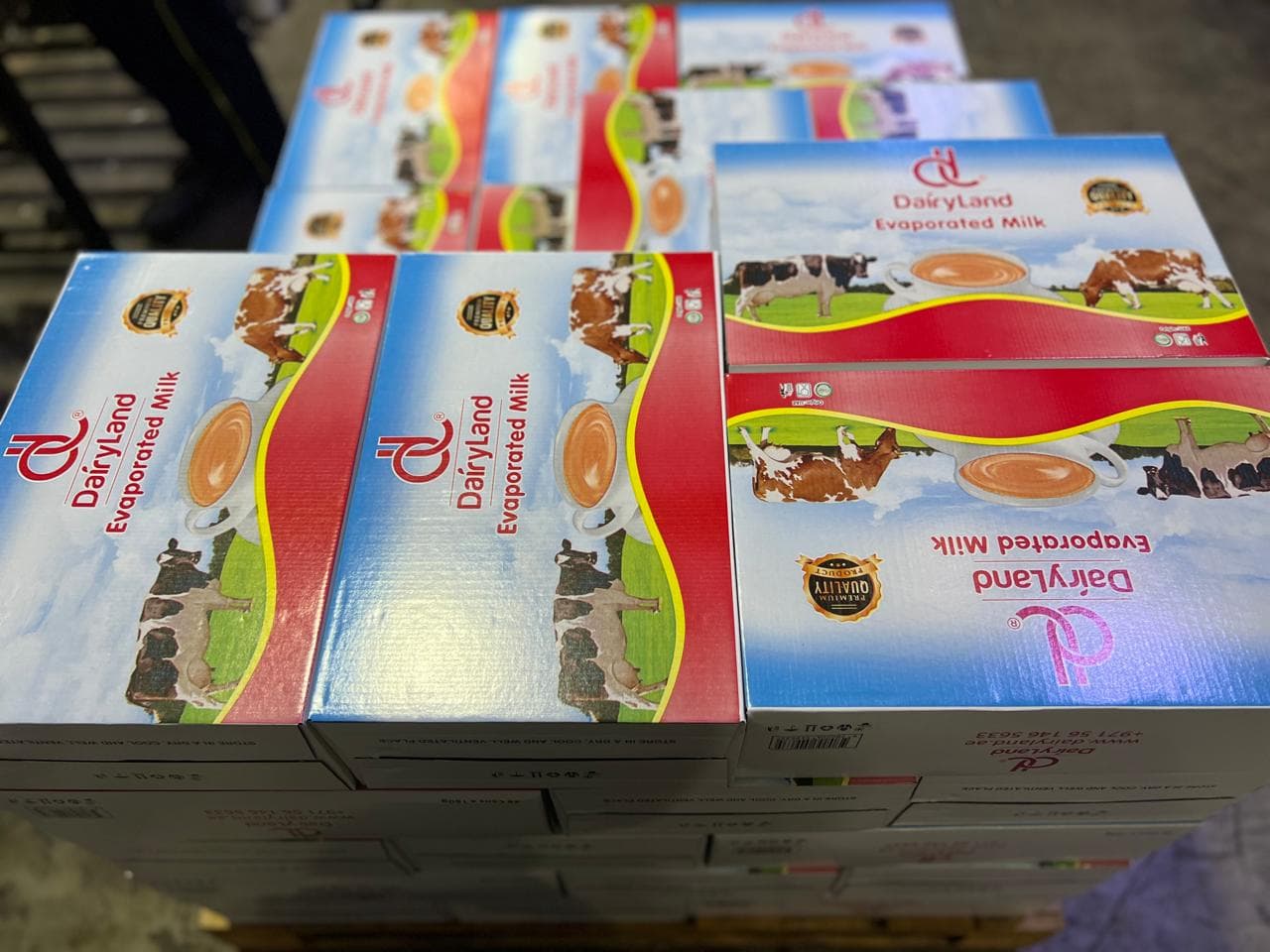
West Africa remains one of the world's most structurally import-dependent food markets, and 2026 has delivered a sharp reminder of how quickly the operating environment can shift. A combination of policy shocks, currency turbulence and rising international commodity prices is forcing importers and distributors to reassess their sourcing and pricing strategies across virtually every category — from milk powder and evaporated milk to canned fish, tomato paste and cooking oil.
The Dairy Deficit: Structural Demand That Is Not Going Away
Africa's continental dairy import bill stood at $7.5 billion in 2023, set against exports of just $1.1 billion — a trade deficit of $6.4 billion, according to the 2025 African Agriculture Barometer. Milk powder, fat-filled milk powder and infant formula together account for 76% of Africa's dairy imports, and despite local production growing 17% between 2013 and 2023, the continent's share of global output remains stuck at around 5%.
For West Africa specifically, this gap translates into durable, growing demand for imported dairy products. However, demand alone does not guarantee margin. In Nigeria — the region's largest consumer market — the average retail price of a 150g tin of evaporated milk reached ₦1,055 in April 2026, up from ₦994 in February, a rise of over 6% in just two months (NBS data). On the export-price side, Nigeria's average benchmark for powdered, evaporated and condensed milk was recorded at $2,920 per tonne in 2024, representing a 31% year-on-year increase. These are signals of tight supply and elevated replacement costs, not of softening demand.
Nigeria's 2026 Import Ban: A Critical Policy Risk for Non-ECOWAS Suppliers
The most significant policy development of the year is Nigeria's 2026 Fiscal Policy Measures, which took effect on April 1, 2026. Under this framework, Nigeria has moved to restrict imports of agricultural and food products sourced from countries outside the ECOWAS trade bloc. A 90-day grace period applied to pre-existing trade agreements, but new import transactions from April 1 onward fall under the new regime.
For exporters based outside the ECOWAS region, this is a high-priority compliance issue. Importers and their sourcing partners should urgently verify whether specific HS codes covering their product categories are subject to exemptions, waivers or existing contractual protections before committing to new shipments. The interaction between this ban and individual product tariff schedules adds further complexity. Nigeria already applies one of the steeper supplemental tariff rates in the region on tomato paste — 50% — alongside elevated duties on wheat, sugar and rice. Layered on top of ECOWAS CET rates and Nigeria's 7.5% VAT, landed costs for several food categories were already challenging before this new policy layer.
Currency Volatility: Nigeria Squeezed, Côte d'Ivoire a Bright Spot
Exchange-rate dynamics are amplifying every other cost pressure in the region. Nigeria's naira, following the 2023 managed float, had depreciated to approximately ₦1,700 to the US dollar by mid-2026 — compared to around ₦400 at the time of the float. With Nigeria's year-on-year inflation running at 15.4% as of March 2026, importers operating in naira are facing a compounding squeeze on margins and retail price headroom.
Ghana's cedi showed a remarkable recovery through much of 2025, appreciating over 40% in the first nine months of the year on the back of stronger gold revenues. However, the cedi reversed course in 2026, depreciating 4.6% in May alone, prompting the Bank of Ghana to tighten liquidity. The African Development Bank has projected further weakness for both the naira and cedi through the 2025–2026 period.
Against this backdrop, Côte d'Ivoire stands out as the region's most stable import market. The CFA franc's euro peg insulates Ivorian importers from the currency swings hitting their neighbours, making it the most predictable environment for landed-cost planning in the short to medium term.
Logistics and Distribution: Capacity Growing, Complexity Increasing
On the logistics side, Ghana's Tema Port continues to expand regional capacity through the Meridian Port Services development, reinforcing its role as a transshipment hub for neighbouring landlocked markets. However, congestion during peak shipping periods remains a factor that importers should build into lead-time calculations. For Nigeria-bound cargo, the policy and FX environment demands especially close coordination between freight forwarders, customs agents and in-country distribution partners to avoid costly delays or compliance exposure.
Takeaway for importers and distributors: The structural case for food imports into West Africa — particularly dairy — remains intact, underpinned by a multi-billion dollar supply deficit. But 2026 has raised the compliance and currency-risk bar considerably, especially for Nigeria. Thorough due diligence on tariff classifications, product-level exemptions under Nigeria's new import regime, and hedging or pricing strategies that account for naira and cedi volatility are no longer optional — they are prerequisites for sustainable trade in this corridor.
Sources
- Africa’s dairy deficit keeps milk prices high
- Africa's Powdered, Condensed or Evaporated Milk Market Report 2026 - Prices, Size, Forecast, and Companies
- Ghana's Powdered, Condensed or Evaporated Milk Market Report 2026 - Prices, Size, Forecast, and Companies
- Nigeria's Powdered Milk Market Report 2026 - Prices, Size, Forecast, and Companies
- South Africa's Powdered, Evaporated and Condensed Milk Market Report 2026 - Prices, Size, Forecast, and Companies
- Price for Sweetened Condensed and Evaporated Milk in Nigeria - 2025 - Charts and Tables - IndexBox.
- White Milk Powdered Market in Africa | Report - IndexBox - Prices, Size, Forecast, and Companies
- Africa’s Dairy Import Bill Rises as Local Production Struggles to Meet Demand - AgroNigeria
This article is market commentary prepared by the Dairy Land Research Team for general information only and does not constitute commercial, financial or trading advice.