
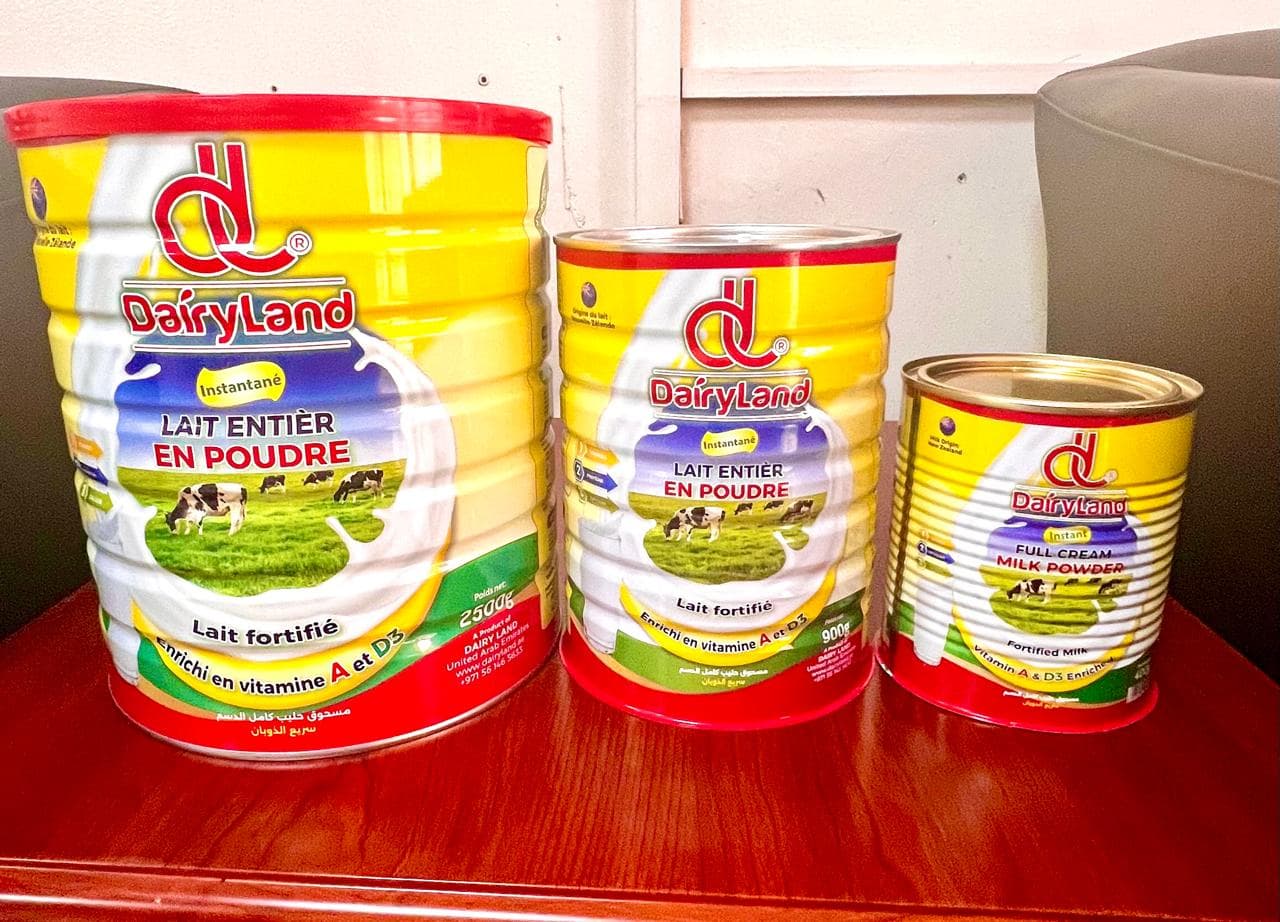
The global dairy market is navigating a period of meaningful transition as Q3 gives way to Q4 2026. After a dramatic commodity price correction in the first half of the year, early signs of stabilisation are emerging — but the supply picture across major exporting regions is anything but uniform. For buyers, importers and distributors operating in the UAE and West Africa, understanding these diverging dynamics is essential for informed procurement decisions.
Production: A Tale of Three Exporters
The United States has emerged as the standout growth story among major dairy exporters. USDA forecasts US milk production at 106.2 million metric tons in 2026, a 1.2% increase on 2025, driven by herd expansion — now exceeding 200,000 cows for the first time since the 1990s — alongside higher yields per animal and rising fat and protein output. US cheese exports are forecast to exceed 620,000 metric tons in 2026, surpassing last year's record, while SMP, NFDM and whey volumes remain robust. The United States has effectively cemented its position as an aggressive global exporter, and buyers in West Africa will feel that competitive pressure directly in SMP and WMP import pricing.
The European Union, by contrast, is contracting. Milk production is forecast at 148.95 million metric tons in 2026, down 0.5% year-on-year, reflecting a nearly 1% decline in cow inventories compounded by disease outbreaks and tightening environmental regulations. The downstream effect on export volumes is significant: EU butter exports are forecast down 15%, whole milk powder (WMP) down 11%, and fluid milk down more than 7%. Structural pressures — declining farm profitability and accelerating consolidation — suggest this is not a temporary dip. Future EU output growth is more likely to come from productivity improvements than herd expansion.
New Zealand sits in a middle position. The country recorded its highest milk production since 2018 in 2025 at 22.0 million metric tons, and output in 2026 is forecast at 21.9 million metric tons — essentially stable. Butter production is expected to grow 2% to 545,000 tons, with nearly all of it destined for export. However, New Zealand faces mounting competitive pressure from the US, particularly as American milkfat processing capacity expands rapidly.
Price Correction and Early Stabilisation
The most dramatic price movement of the past twelve months has been in fat markets. From September 2025 to February 2026, butter and AMF prices fell by more than 40%, while whole milk powder declined by approximately 30% over the same period. The global dairy trade index has since turned negative, with butter recording an 8.1% decline and AMF a 7.1% decline in the most recent reading.
Protein commodities have proven considerably more resilient. SMP, cheese and whey recorded price declines of roughly 15% over the same period, and whey prices have continued to rise on the back of strong global demand for high-protein products. USDA spot data for the week of 31 August–4 September 2026 places US butter at $1.4747/lb, NFDM/SMP at $1.5985/lb, and cheese at $1.6203/lb — levels that, while off their peaks, reflect a market finding a floor rather than continuing to fall.
What to Watch in Q4 2026
As the year-end approaches, two forces are likely to shape the market. First, the EU's production contraction will become increasingly visible in export availability, particularly for butter and SMP. This supply tightening could provide modest price support in those categories during Q4 — a relevant signal for buyers planning forward procurement. Second, US export competitiveness will continue to exert downward pressure on WMP and SMP pricing in import-dependent markets, including West Africa's key economies.
Overall, the Big 7 exporters are forecast to close 2026 with combined output only marginally ahead of 2025 — up just 0.2% year-on-year — a sharp deceleration from the 2.6% growth recorded in 2025.
Takeaway for Buyers and Distributors
Commodity input costs for key dairy products — SMP, WMP, butter and AMF — have corrected substantially from their 2025 peaks and are showing early signs of stabilisation. The EU supply story is the critical watch item for Q4 butter and SMP pricing, while US export momentum will keep WMP and SMP pricing competitive in West African import markets. Protein commodities remain the relative outperformers in this cycle. Importers and distributors would be well advised to monitor EU export availability closely as the quarter progresses and consider whether current price levels represent a procurement opportunity before any Q4 tightening takes hold.
Sources
- Global Dairy Outlook Q1 2026: Milk Supply Rises, Prices Fall
- Global dairy quarterly Q1 2026 | A delicate dairy balance
- Global Dairy Market Outlook 2026: Production & Trade Trends
- Global dairy quarterly Q4 2025
- Q4 Rabobank update – Global dairy supply surpasses demand | AHDB
- Global Dairy Quarterly - Rabobank
- Global dairy outlook 2026: glut, prices and growth bets
- "What to Watch" in Dairy Markets in 2026 - Center for Commercial Agriculture
This article is market commentary prepared by the Dairy Land Research Team for general information only and does not constitute commercial, financial or trading advice.