
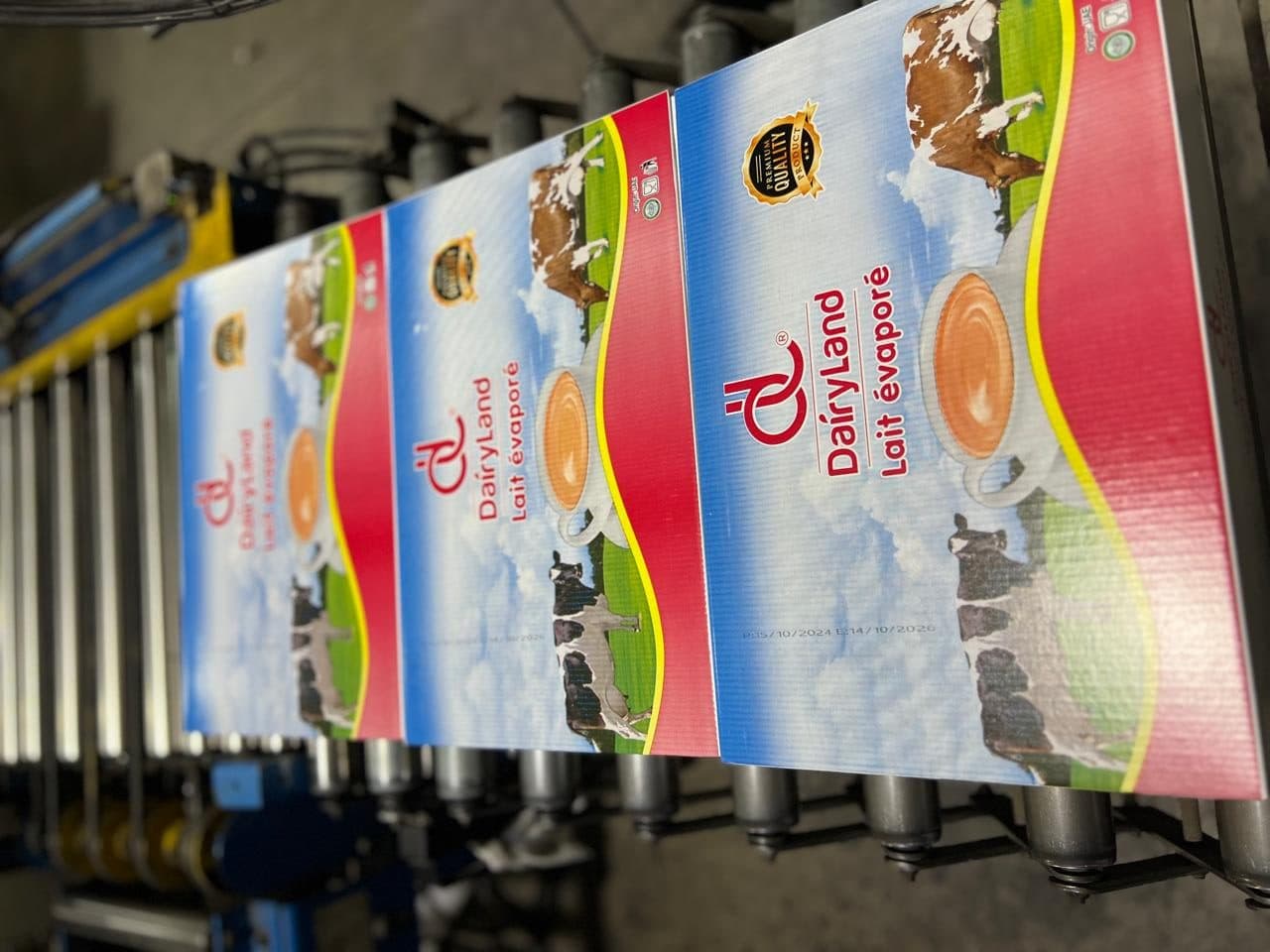
Ocean freight costs matter enormously for food supply chains. Whether it is a consignment of milk powder moving from Dubai to Lagos, or canned goods sourced from Asia for re-export across the Gulf, the price of moving a container shapes landed costs, margins and ultimately the price on the shelf. Right now, all the major cost pressures are pointing in the same direction: upward.
The Global Rate Environment: Well Above Pre-Crisis Norms
Drewry's World Container Index placed the global average cost of shipping a 40-foot container at $4,297 as of early August 2026 — a figure that represents a 77% year-on-year increase on spot rates. Freightos's parallel index was tracking at $3,627.60 per FEU as of late July. While rates dipped to around $2,107 per FEU in January 2026, that trough proved short-lived. Rates rebounded sharply through the first half of the year and remain well above the norms that importers were accustomed to before 2023.
The principal cause is one that has not gone away: the Houthi conflict and the ongoing disruption to Red Sea and Suez Canal routing. What began as a temporary emergency has, by mid-2026, been characterised by industry observers as a structural shift in global logistics. The overwhelming majority of major carriers now treat the Cape of Good Hope route as their default for Asia–Europe services. That detour adds roughly 14 extra transit days per voyage and approximately $1.6 million in additional fuel costs per round trip. War-risk insurance premiums for Red Sea transits have climbed to 1.0% of hull value in Q3 2026. Asia–Europe freight rates are running 25–40% above pre-disruption levels as a result. While Maersk has completed test voyages through Suez, the industry consensus is that diversions will continue through at least 2027.
West Africa: Elevated Rates, Surcharges and Structural Congestion
For importers sourcing from China into West Africa, rates on the trade lane ranged from $2,800 to $7,500 per 20-foot container in July 2026 according to SCFI data. The wide spread reflects the gap between contract and spot rates that opens up during demand surges — a spread that catches buyers on short-term or ad-hoc purchasing arrangements particularly hard.
On top of base freight, active surcharges are adding material cost. Maersk imposed a Peak Season Surcharge of $1,000 per 20-foot container on West Africa cargo from 1 July 2026. MSC and CMA CGM are running PSS charges in the $600–$800 range. CMA CGM additionally announced a Port Congestion Surcharge of $600 per TEU on cargo to Freetown, Sierra Leone, from mid-June. Container Imbalance Charges are adding a further $100–$300 per box. None of these are trivial line items at the volumes that food importers move.
Demand is not the problem — West Africa's H1 2026 imports from China are up 12–15% year-on-year, partly sustained by China's zero-tariff policy on 53 African least-developed countries introduced in December 2024. The problem is the infrastructure handling that demand. Lagos's Apapa and Tin Can terminals are widely regarded as among the world's most congested ports. Vessel anchorage waiting times are running at 14 to 21 days — against a global average of 2–3 days. Average cargo dwell times inside the terminals are 18–21 days, compared with 5–7 days in Ghana and around 4 days in Cotonou. In July 2026, a single vessel anchorage situation generated a reported $3.38 million demurrage exposure. Logistics and clearance costs at Lagos run roughly 30% above West African peers, and congestion alone is estimated to add 20–30% to the final landed cost of imports. Compounding the pressure, major carriers including MSC, Maersk and CMA CGM are reallocating vessel capacity toward higher-margin US routes, tightening supply on Africa lanes further.
Hormuz and the Gulf: A Latent but Live Risk
For Gulf-based operators, the Strait of Hormuz remains the key pressure point. The strait carries approximately 20% of the world's daily oil consumption, and any escalation between Iran and Gulf states pushes crude prices higher almost immediately — which feeds into bunker fuel costs and translates into freight rate revisions within days through Bunker Adjustment Factor mechanisms. Direct effects for Gulf trade include periodic spikes in war-risk insurance, temporary carrier suspensions of Gulf port calls, and short-notice rerouting of transshipment through Salalah or Khor Fakkan. The risk is latent rather than acute at present, but it requires active monitoring and contingency planning from any importer dependent on Gulf routing.
Outlook and Practical Takeaway
A modest Q4 2026 softening window is possible if capacity temporarily migrates back to Africa lanes as US and European peak season demand cools. However, the price floor remains firm as long as Lagos port congestion persists — and there is no near-term structural fix in sight there. The 3.2 million TEU of new vessel capacity currently on order may begin to ease the global rate environment by mid-2027, but offers little practical relief before then.
For food importers, distributors and sourcing teams operating on UAE–West Africa corridors, the operating reality is clear: freight is structurally expensive, surcharges are active and demurrage exposure at Lagos is a genuine financial risk, not a theoretical one. Building transit buffers, locking in contract rates where available, and diversifying port options within West Africa are the most actionable responses to a freight environment that is unlikely to normalise before 2027.
Sources
- Ocean Freight Rate Forecast 2026: Is a Turning Point Coming
- Ocean Freight Rates 2026: Prices, Surcharges & Savings
- USA to West Africa Shipping: Mode, Costs & Documentation
- Ocean Freight Rates 2026: FCL & LCL Prices | Suaid Global
- West Africa Shipping Rates 2026 | Lagos Congestion Analysis | Great Hensen
- Africa Shipping Rates August 2026: Three Lanes Flat, Congestion Holds Prices High | Great Hensen
- Ocean Freight Spot Rates 2026: What Moves Container Rates | Gateway
- International Container Shipping Rates Chart: August 2026
This article is market commentary prepared by the Dairy Land Research Team for general information only and does not constitute commercial, financial or trading advice.