
West Africa's food import story is no longer simply one of supply gaps — it is a story of structural, demographic-driven demand that is reshaping trade flows across the region. With a combined population exceeding 320 million across Nigeria, Ghana, Côte d'Ivoire, and Senegal alone, and a median age of just 18.4 years, the region represents one of the most consequential long-run demand markets for dairy and food products anywhere in the world.
A Young, Urban Population Driving Sustained Demand
Urbanisation is the engine beneath West Africa's food import growth. Across Western Africa, approximately 50.5% of the population — around 241 million people — now lives in urban areas, and that share is climbing. Ghana's urban population is growing at over 3% per year; Côte d'Ivoire's population, 60% of which is under 25, is expanding at more than 2% annually. This demographic profile translates directly into rising demand for packaged, processed, and shelf-stable foods — precisely the categories where local production capacity continues to fall short.
Nigeria alone, with a population of 237.5 million, illustrates the scale of the opportunity. The country produces roughly 527,000 tonnes of milk domestically but imports approximately 927,000 tonnes to meet demand — meaning imports account for around 64% of available milk supply. Estimated dairy import expenditure runs to approximately US$1.5 billion per year. That is not a temporary imbalance; it reflects a structural supply gap that has widened over years and shows no near-term sign of closing.
Dairy: The Defining Import Category
Across the African continent, the dairy trade deficit reached US$6.4 billion in 2023, with imports of US$7.5 billion against exports of just US$1.1 billion. Milk powder, fat-filled milk powder (FFMP), and infant formula together accounted for 76% of those imports. In West Africa specifically, FFMP is the dominant product: it accounts for roughly two-thirds of regional dairy imports and, as of recent baseline data, nearly 70% of dairy consumption in most capitals.
The country-level signals reinforce this picture. In Côte d'Ivoire, dairy is the second-largest imported product category after wheat, with six major companies sourcing foreign-origin dairy for processing into yoghurt, curdled milk, and UHT milk. In Ghana, dairy products rank second on the list of fastest-growing agricultural import categories, behind only poultry — and Ghana's total consumer-oriented agricultural imports reached US$1.68 billion in 2025. Senegal, meanwhile, ranks among Africa's top five dairy import markets, representing around 5% of the continent's total dairy import bill.
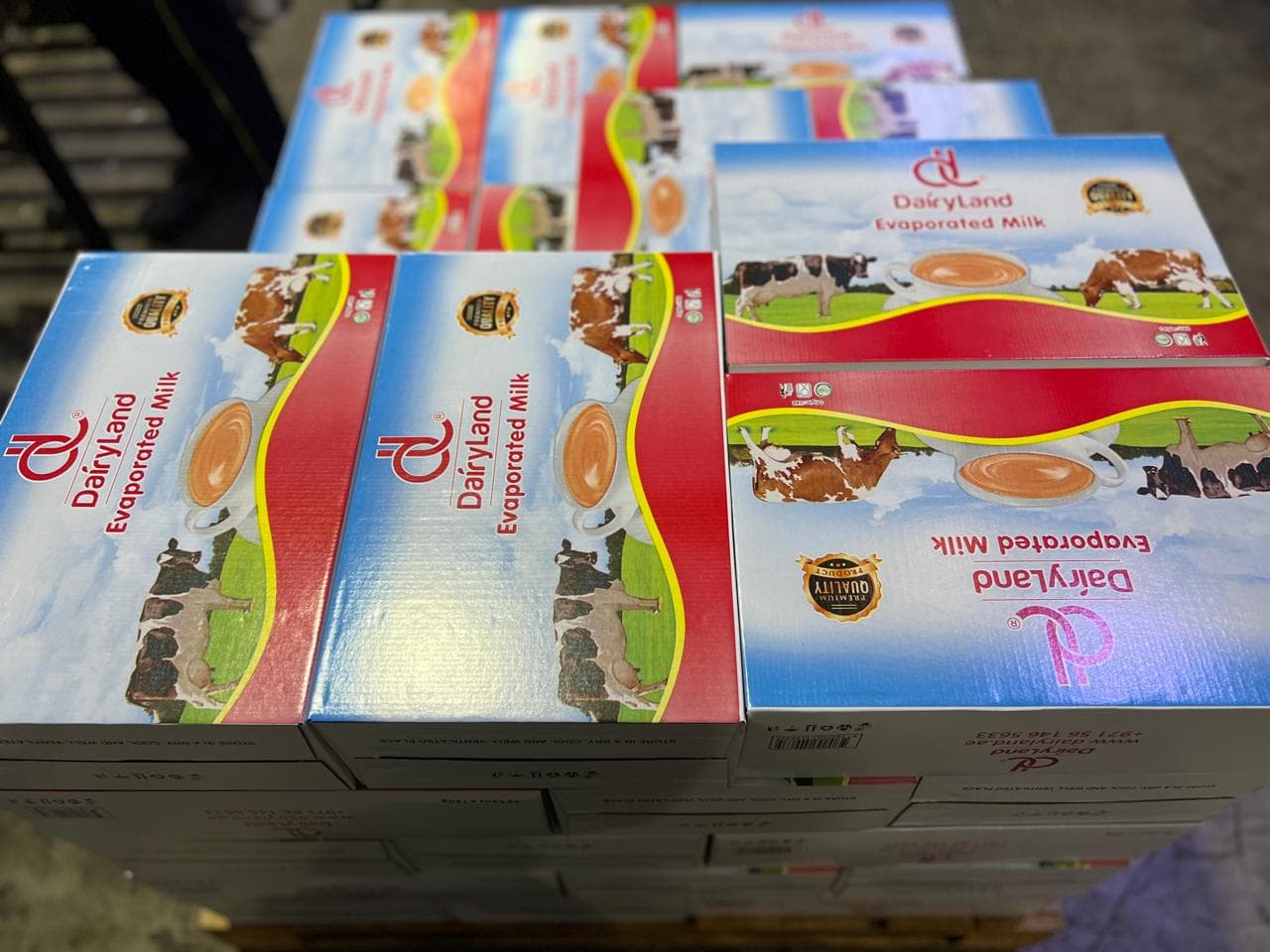
At the consumer level, price data from Nigeria's National Bureau of Statistics offers a telling signal: the average retail price of a 150g tin of evaporated milk rose 6.13% in just two months, reaching ₦1,055.15 in April 2026. That rate of increase reflects sustained demand pressure that importers and distributors across the supply chain are navigating in real time.
Currency Dynamics: Managing the Risk Differential
Currency volatility remains the most operationally significant variable for importers across the region. The Ghana cedi's trajectory in 2025–2026 has been dramatic: after becoming the world's best-performing currency in Q2 2025, appreciating 30–40% against the dollar, it reversed sharply and by July 2026 had depreciated 11.6% year-to-date — making it Africa's weakest-performing currency in that period. For importers financing USD-denominated purchases, that swing directly inflates landed costs and compresses margins.
Nigeria presents a more encouraging picture in the near term. The naira appreciated approximately 5.58% year-to-date as of September 2026 and stayed off the list of Africa's ten weakest currencies — offering importers a degree of relative stability that has been absent in recent years. For suppliers and distributors pricing in US dollars, Nigeria's current exchange environment is notably more workable than Ghana's.
Adjacent Categories Worth Watching
Dairy is not the only product category seeing rising import demand. Nigeria's grain imports — wheat, rice, and maize — are projected at 10.1 million tonnes for 2025/26, up 10% year-on-year. Across Senegal and Côte d'Ivoire, vegetable oils and cooking fats remain a high-demand import driven by cooking habits and an expanding processed food sector. Ghana's food processing ingredient imports reached US$1.27 billion in 2025, with growth continuing into 2026. These trends point to broad-based food import expansion, not a dairy-specific phenomenon.
Closing Takeaway
The fundamentals shaping West Africa's import market are durable: a young, fast-urbanising population, a structural dairy supply deficit, and limited near-term capacity for local production to close the gap. For importers and distributors, the key operational variables are currency risk — particularly in Ghana — and product-level demand signals that increasingly favour shelf-stable dairy formats, cooking oils, and grain-based staples. Suppliers positioned to offer consistent supply, competitive landed pricing, and reliable logistics into this region are well-placed to grow with one of the world's most consequential food markets.
Sources
- Report Name: Food Processing Ingredients Annual - 2026
- Growing dairy industry in Africa taps more investments as demand rises - Issuu
- Africa's Dairy Equation: More Milk, But More Imports, Too - Ecofin Agency
- Report Name: Grain and Feed Annual - 2026
- 1 Voluntary Report
- Nigeria’s 2025/26 grain imports projected at 10.1M tons, up 10%
- Forecast: Import of Milk Powder to Nigeria 2022 - 2026
- (2026) Export to Africa: Top Food Products with High Demand
This article is market commentary prepared by the Dairy Land Research Team for general information only and does not constitute commercial, financial or trading advice.