
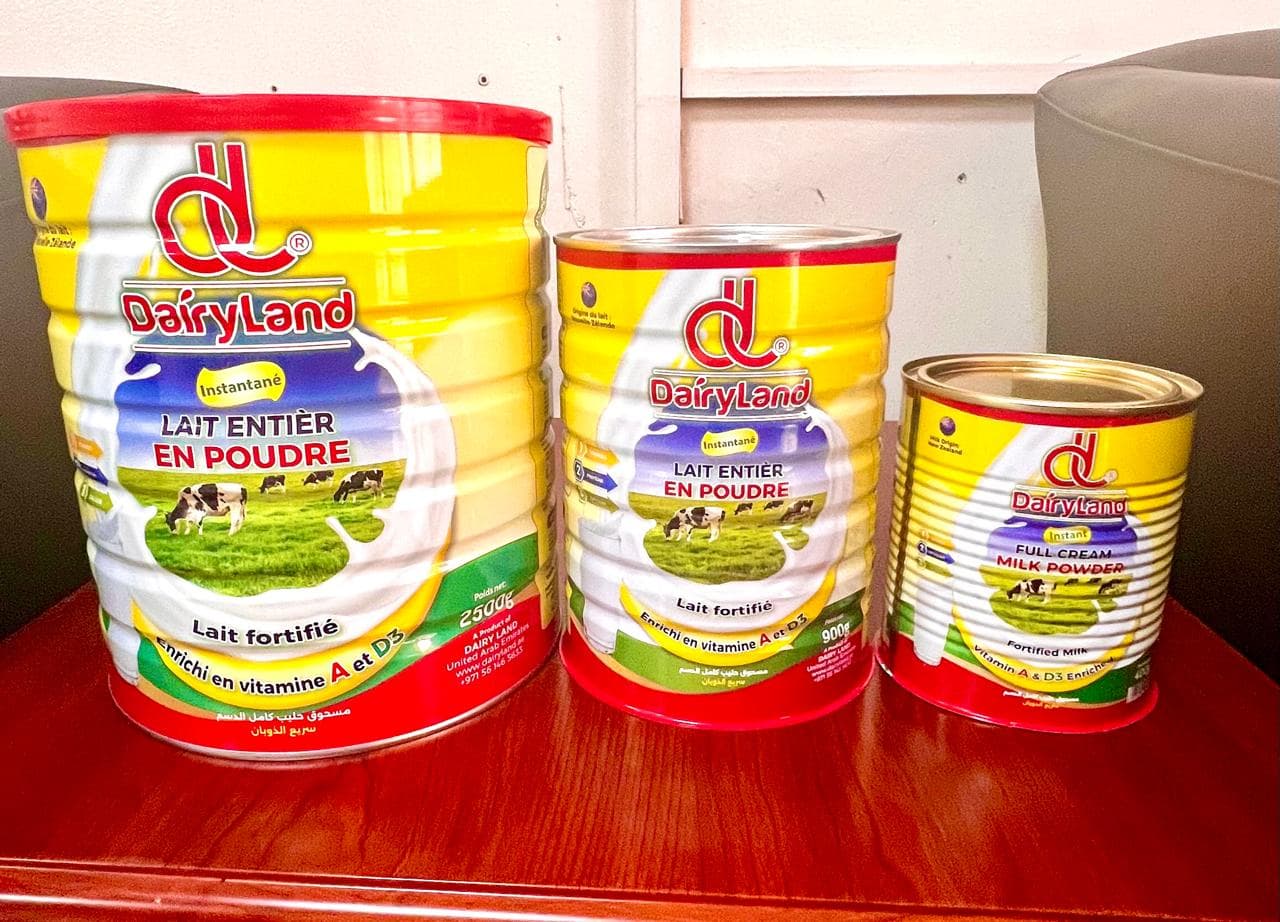
The global dairy market enters Q4 2026 in a state of notable divergence: supply is growing in some major exporting regions while contracting in others, demand signals remain cautious in key consuming markets, and commodity prices are trending downward on a year-on-year basis. For importers, distributors and procurement teams operating in the UAE and West Africa, understanding these cross-currents is essential for making well-timed sourcing and inventory decisions.
Production: A Tale of Three Regions
The most significant production story of 2026 is New Zealand's record performance. Milk output is forecast to reach 22.5 million metric tons for the year, driven by favourable farmgate prices, improved producer margins and continued on-farm investment. Whole milk powder (WMP) — New Zealand's largest dairy export by volume — is projected to reach 1.4 million tons, and August 2026 export data underscores the momentum: milk powder, butter and cheese shipments totalled $1.2 billion in that month alone, up 7.6% year-on-year. For markets that rely heavily on WMP and butter, New Zealand's pipeline is fuller than it has been in years.
The United States is also expanding. USDA forecasts U.S. milk production at 106.2 million metric tons in 2026, up +1.2% from 2025, underpinned by herd growth and rising processing capacity. Strong domestic cheese demand is absorbing a significant share of that output, but the U.S. remains well-positioned to compete on skim milk powder and other export categories — particularly if EU supply continues to tighten.
The European Union, historically a dominant force in global dairy trade, is heading in the opposite direction. Output is forecast at 148.95 million MT, a 0.5% decline from 2025, as lower cow inventories, livestock disease outbreaks, elevated energy and fertiliser costs, and tightening environmental regulations weigh on farm-level expansion. While EU milk deliveries recovered in early 2026 relative to weather-affected 2025 levels, growth is expected to moderate as the year closes. The practical effect is reduced EU export pressure — a shift that benefits other origins competing for the same import markets.
Beyond the main three, Argentina is forecast to post the largest percentage production gain among major exporters at +4.0%, recovering from 2024 drought impacts, while Australia is expected to rebound +1.8% on improved southern rainfall.
Commodity Prices: Softness Heading into Q4
The price environment heading into Q4 2026 is one of measured caution. On CME cash markets in the week of 25 September 2026, nonfat dry milk (NDM) Grade A was priced at $2.17/lb, butter (Grade AA) at a weekly average of $1.3645/lb, and cheese barrels at $1.4525/lb. While the October 2026 base Class I milk price rose to $18.88/cwt — up $1.84 from September — the futures picture tells a more cautious story. Milk futures fell to 14.94 USD/cwt on 2 October 2026, down approximately 8.5% over the prior month and 13.2% year-on-year, indicating that the broader price trend remains under pressure.
This softness is not driven by supply alone. Rabobank flagged ongoing sluggishness in foodservice demand across key markets, with consumer confidence under pressure in both the U.S. and China and discretionary spending being reined in — dynamics that continued to shape the 2026 supply-demand balance. Globally, the combined output of the world's major dairy-exporting nations is forecast to grow by just +0.12% in 2026, a sharp deceleration from +2.2% in 2025, which may provide some price floor as the quarter progresses.
What This Means for UAE and West Africa Markets
For buyers sourcing milk powder, evaporated milk, condensed milk or butter for distribution in the UAE or West Africa, the current environment presents both opportunity and complexity. The combination of record New Zealand WMP availability and a softening price trend in futures markets may create a more competitive procurement window in Q4 — particularly for powder-based products. At the same time, USDA market commentary from September 2026 noted that procurement is moving well to meet Q4 buyer needs, suggesting supply chains are broadly functional.
The EU's reduced competitiveness on export markets may shift some trade flows toward U.S. and Oceania origins. According to the OECD-FAO Agricultural Outlook 2026–2035, the U.S. is well-placed to capture additional export demand precisely because EU and New Zealand production growth is constrained or uneven.
Closing Takeaway
Q4 2026 is shaping up as a buyer's market in several key dairy commodity categories. Prices are softer year-on-year, New Zealand supply is at record levels, and global supply growth has decelerated enough to temper — but not eliminate — downward price pressure. Importers and distributors who move decisively on forward procurement in this window may be well positioned ahead of any price stabilisation in early 2027. As always, monitoring CME futures and USDA market news on a weekly basis remains the most reliable way to time purchasing decisions in a volatile environment.
Sources
- DAIRY MARKET NEWS MMN Slug ID 2998 WEEK OF SEPTEMBER 7
- Dairy Outlook Thursday, February 19, 2026
- Global Dairy Market Outlook 2026: Production & Trade Trends
- Global Dairy Quarterly Q3 2026
- Q4 Rabobank update
- Dairy market outlook
- The milk market in 2026
- Dairy: World Markets and Trade U.S. Milkfats Exports to Churn Out New Records
This article is market commentary prepared by the Dairy Land Research Team for general information only and does not constitute commercial, financial or trading advice.