
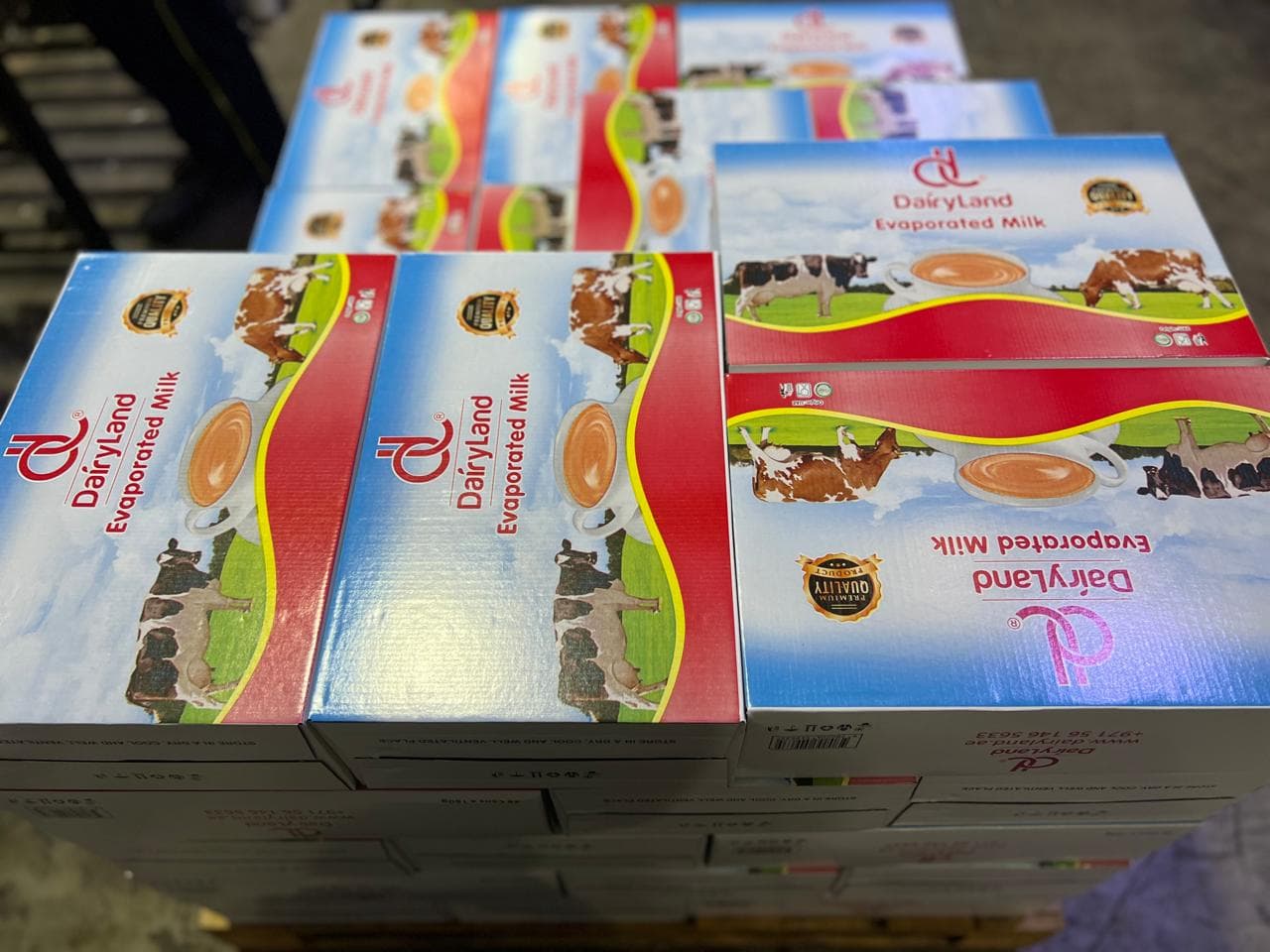
West Africa remains one of the world's most dynamic — and most demanding — import markets for dairy, canned fish, tomato paste and cooking oil. Structural urbanisation, a persistent local production deficit, and a rising middle class continue to pull in significant volumes from extra-regional suppliers. Yet 2026 has introduced a sharper layer of policy complexity that every importer and distributor must navigate carefully.
Dairy: Structural Demand, but Nigeria's Import Trajectory Is Shifting
Africa's structural reliance on imported dairy is not in doubt. The continent's white milk powder market is estimated at 1.3–1.6 million metric tonnes in 2026, valued at roughly USD 3.8–4.6 billion at landed import prices, sustained by urban growth and a persistent domestic raw-milk deficit. Within that broader picture, Africa's dry whole milk powder (WMP) segment alone is estimated at 450,000–550,000 metric tonnes — a market worth USD 1.8–2.4 billion.
Buyers should note, however, that benchmark costs have built-in pressure from multiple sides. GDT WMP prices in 2026 are running at approximately USD 3,200–3,800 per tonne FOB, with skimmed milk powder (SMP) at USD 2,600–3,200. African markets typically trade at a 5–20% premium over GDT benchmarks due to port-handling costs and import duties, and instant or agglomerated grades carry a further 10–25% premium. Container freight from Europe or New Zealand to West African ports adds USD 400–800 per tonne, and inland haulage to industrial buyers adds another USD 100–300.
Nigeria, the region's largest economy, presents a particular watchpoint. Its milk powder import value is projected to decline from USD 43 million in 2023 to roughly USD 16 million by 2028 — a compound annual contraction of approximately 18% — as government policy actively encourages domestic sourcing. Meanwhile, the average Nigerian import price for evaporated and condensed milk fell 21.2% year-on-year in 2024 to USD 825 per tonne, signalling both competitive pressure and currency-driven affordability stress at the retail end, where a 150-gram tin of evaporated milk reached ₦1,055 by April 2026.
Tomato Paste and Cooking Oil: Nigeria's April 2026 Ban Is Now in Force
The single most consequential regulatory development of 2026 for extra-regional food suppliers is Nigeria's April 2026 import prohibition. A circular from Finance Minister Wale Edun explicitly banned importation of tomato paste and refined vegetable oil — along with 15 other product categories — from all non-ECOWAS member states. A 90-day grace period was granted for importers with pre-existing Form 'M' documentation; that window expired around July 2026 and is now closed.
For UAE-origin shipments, this is a direct and active compliance issue. Nigeria already imposed a 50% effective duty on tomato paste imports (tariff plus levies plus VAT) prior to the ban, making it one of the most protected agricultural tariff lines in the country. The new prohibition goes further, removing the option of paying to access the market at all from non-ECOWAS origins. Importers and distributors who have not yet completed a compliance review of their Nigerian supply chains should treat this as urgent.
Côte d'Ivoire applies a different but equally important framework: minimum import prices (MIPs) on both tomato paste and cooking oil to prevent dumping, layered with an 18% VAT and a 2.6% additional import surtax on all goods. The MIP regime rewards suppliers who can document fair-value pricing and maintain consistent quality documentation.
Canned Fish, ECOWAS Tariffs and Currency Risks
Canned and preserved fish face a structurally high-tariff environment across ECOWAS. Under the ECOWAS Common External Tariff (CET), most prepared or preserved fish — including tuna and canned sardines — fall into Group D, attracting duties of 20–35% and explicitly excluded from liberalisation under the EU–West Africa Economic Partnership Agreement. Morocco dominates regional supply of canned sardines and mackerel, giving it a logistical and relationship advantage that extra-regional suppliers must price into their positioning.
Broader tariff dynamics add complexity. Nigeria alone applies supplemental levies that push effective duties on more than 80 tariff lines to 50% or above, with around 35 lines exceeding the 70% ceiling technically set by ECOWAS rules. On the currency side, Ghana's persistently weak cedi is flagged by USDA analysts as a structural threat to import affordability, compressing margins for distributors selling at local-currency prices while paying for goods in US dollars.
Takeaway: Policy Literacy Is Now a Competitive Advantage
The West African food import landscape in 2026 rewards suppliers and distributors who combine strong product credentials with rigorous regulatory intelligence. Nigeria's non-ECOWAS import bans on tomato paste and vegetable oil are the most pressing compliance matter. Simultaneously, the sustained demand for imported dairy — despite Nigeria's declining milk powder trajectory — and the high-tariff environment for canned fish point to a market where landed-cost management and origin-route optimisation are increasingly decisive. Partners operating across multiple ECOWAS markets should also account for informal cross-border flows, which move duty-free under the ECOWAS Trade Liberalisation Scheme and can shift competitive dynamics in ways that official import statistics do not fully capture.
Sources
- Report Name: Dairy and Products Annual
- Africa’s dairy deficit keeps milk prices high
- Ghana's Powdered, Condensed or Evaporated Milk Market Report 2026 - Prices, Size, Forecast, and Companies
- Africa's Powdered, Condensed or Evaporated Milk Market Report 2026 - Prices, Size, Forecast, and Companies
- Dry Whole Milk Powder Market in Africa
- Nigeria's Evaporated and Condensed Milk Market Report 2026 - Prices, Size, Forecast, and Companies
- South Africa's Powdered, Evaporated and Condensed Milk Market Report 2026 - Prices, Size, Forecast, and Companies
- Forecast: Import of Milk Powder to Nigeria 2022 - 2026
This article is market commentary prepared by the Dairy Land Research Team for general information only and does not constitute commercial, financial or trading advice.