
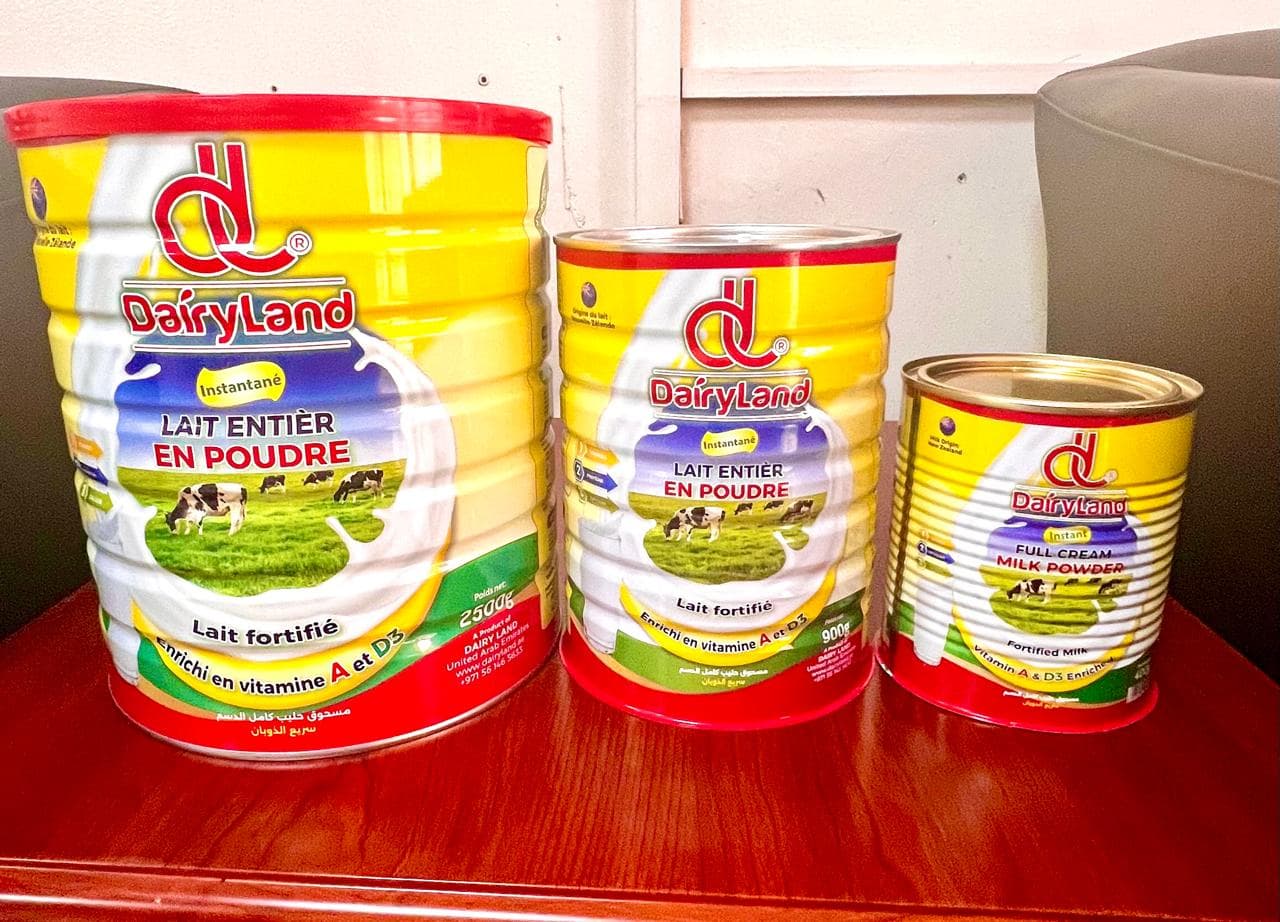
The global condensed milk market stood at USD 11.33 billion in 2025 and is projected to reach USD 11.82 billion in 2026, expanding at a compound annual growth rate of 4.54% through to 2034. Within that global picture, the Middle East and Africa dry, condensed and evaporated milk segment was valued at USD 1.6 billion in 2025 and is on a trajectory toward USD 2.2 billion by 2033 — a 4.9% CAGR underpinned by a structural reality that shows no signs of changing: large portions of both West Africa and the broader Middle East and North Africa region lack reliable cold-chain infrastructure, making shelf-stable dairy formats not a convenience but a necessity.
For importers, distributors, and B2B buyers operating in these corridors, understanding where demand is heading — and what is happening to the cost of producing a tin of evaporated or condensed milk — is increasingly important for procurement planning and commercial strategy.
West Africa: Structural Demand with Near-Term Headwinds
The headline growth story for Africa is broadly positive: the continent's evaporated and condensed milk market is forecast to expand at a +1.3% volume CAGR and +2.8% value CAGR from 2024 to 2035, reaching an estimated 228,000 tons and USD 482 million by 2035. The demand drivers are durable — no reliable cold chain means evaporated and condensed milk functions as a daily staple substitute for fresh dairy, used extensively in tea, coffee, and cooking across urban and peri-urban households. Growing urban populations reinforce this pattern.
However, the immediate backdrop requires candour. Africa's evaporated and condensed milk market contracted to USD 357 million in 2024, a year-on-year decline of 7.5%, reflecting genuine near-term pain: currency depreciation across several West African economies compressed import purchasing power, and consumer affordability pressures curbed volumes. This was not a structural reversal — it was a cyclical correction. The longer recovery trend is expected to reassert itself through the latter half of this decade, but distributors should calibrate inventory and credit terms with that transitional period in mind.
GCC and Middle East: Recovery Underway
In the Gulf and broader Middle East, the recovery from 2024's contraction appears more advanced. The GCC evaporated and condensed milk market is estimated to reach 519,000 tons and USD 1.2 billion, supported by demographic tailwinds — a young, growing population and accelerating urbanisation — and by rising adoption of dairy-based processed foods in markets such as Egypt and the wider MENA corridor. Enhanced distribution infrastructure and growing consumer awareness of evaporated milk applications are adding incremental demand. For suppliers and importers operating out of Dubai, the GCC's geographic proximity and logistics maturity make it the most immediately accessible recovery opportunity.
The Input Cost Environment: A Mixed Picture
The cost environment facing canned dairy manufacturers is genuinely two-sided.
On the raw milk side, conditions have eased. As of July 2026, EU raw milk was priced at USD 479.60 per metric ton, with Australian and Chinese origin material at USD 549.96/MT and USD 521.79/MT respectively. Broader dairy commodity indicators reinforce the softening trend: fat markets fell approximately 40%, whole milk powder declined around 30%, and protein products dropped roughly 15% through Q1 2026. Global milk output growth is forecast at just 0.2% in 2026, a sharp deceleration that reflects cautious herd management, but surplus supply in key exporting regions is keeping farmgate and commodity prices subdued. For producers of evaporated milk, softer input costs are a genuine operational relief — though it comes with a parallel challenge: oversupply-driven commodity deflation also compresses the achievable selling price of finished canned dairy.
Tinplate, however, tells a different story. The steel packaging input that defines the economics of canned dairy is under upward pressure across most sourcing origins. As of June 2026, US tinplate was priced at USD 1,692 per metric ton (FOB), German material at USD 1,307/MT (FOB), and Australian at USD 985/MT (CIF). Even Chinese tinplate — historically the most cost-competitive option and the dominant supply source for UAE-based manufacturers — rose approximately 3.6% in Q2 2026, driven by Baosteel's upward price revisions for electrolytic tinplate and ECCS. European markets have been firm throughout, with higher energy, freight, and conversion costs sustaining elevated price levels.
The practical implication is straightforward: tinplate sourcing strategy, particularly the balance between China-origin and other supply, is one of the most consequential cost-management levers available to canned dairy producers through 2026 and into 2027.
Takeaway for Buyers and Partners
The fundamentals for evaporated and condensed milk in West Africa and the GCC are structurally sound — shelf-stable dairy has a durable role wherever cold chain is absent or unreliable, and demographic trends in both regions point toward sustained volume growth. The near-term picture requires pragmatism: 2024 was a down year, recovery is underway but uneven, and the cost environment demands active management. Buyers and importers who plan procurement around both the recovery trajectory and the tinplate cost cycle will be best positioned to protect margins as the market normalises through the second half of this decade.
Sources
- Condensed Milk Market Size, Share
- Africa's Powdered, Condensed or Evaporated Milk Market Report 2026 - Prices, Size, Forecast, and Companies
- Africa's Evaporated and Condensed Milk Market to See Modest Growth with +1.3% CAGR - News and Statistics - IndexBox
- Ghana's Powdered, Condensed or Evaporated Milk Market Report 2026 - Prices, Size, Forecast, and Companies
- Nigeria's Evaporated and Condensed Milk Market Report 2026 - Prices, Size, Forecast, and Companies
- Price for Evaporated and Condensed Milk in Nigeria - 2025 - Charts and Tables - IndexBox
- Global Dry, Condensed and Evaporated Milk Market Size, Industry Share, Trends & Forecast 2026-2034
- Dry Condensed and Evaporated Milk Market Analysis 2026, Market Size, Share, Growth, CAGR, Forecast, Trends, Revenue, Industry Experts, Consultation, Online/Offline Surveys, Market Analysis and Proprietary database
This article is market commentary prepared by the Dairy Land Research Team for general information only and does not constitute commercial, financial or trading advice.