
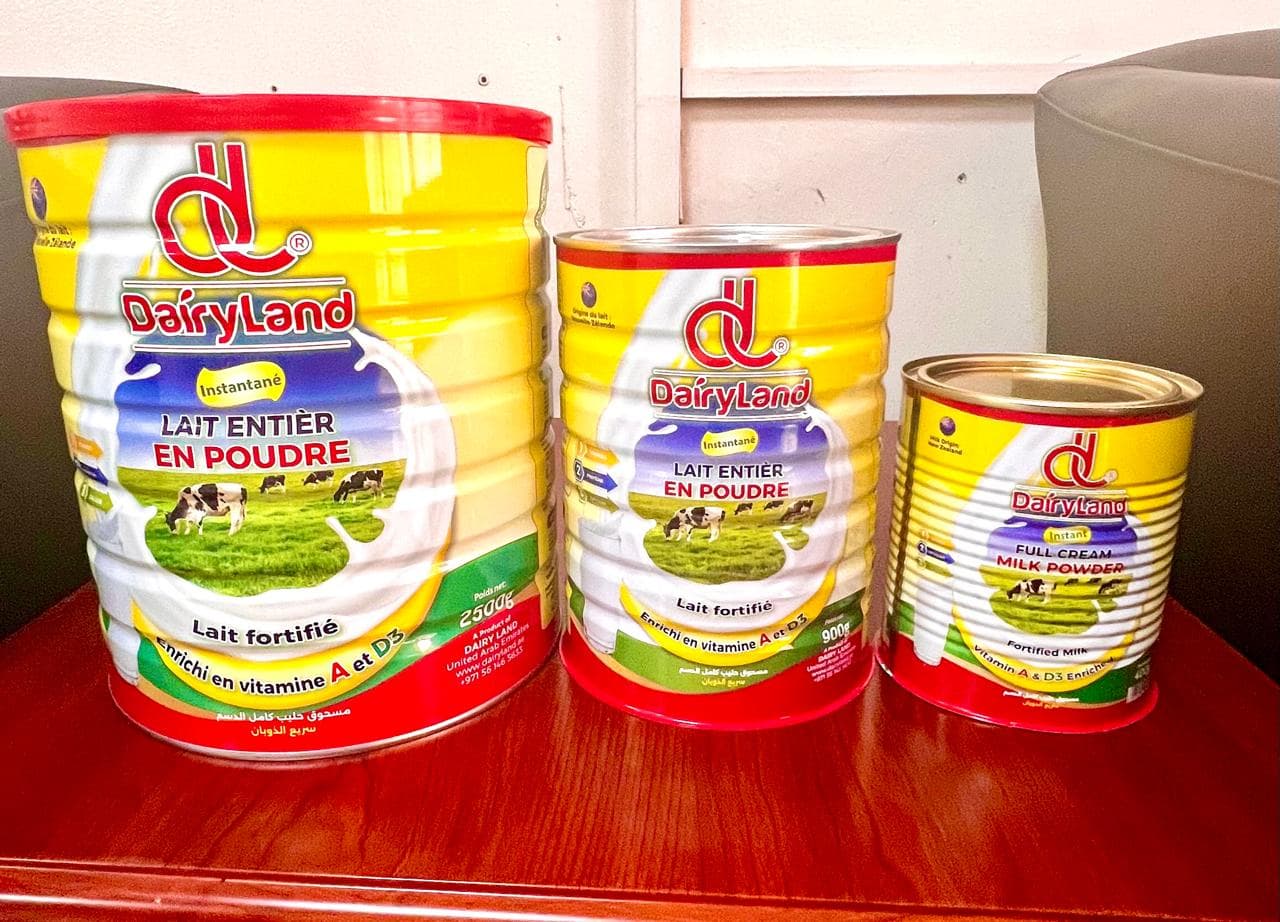
After a relatively comfortable supply environment through late 2025, the global milk powder market has shifted. Production growth is slowing, EU stocks are being drawn down at pace, and benchmark prices are moving upward. For importers and distributors operating in supply-dependent markets like West Africa, understanding these dynamics is essential for sound procurement planning.
Global Output: A Marginal Deficit Against the Long-Run Average
Global whole milk powder (WMP) production in marketing year 2024/25 reached 4.42 million metric tons — down 0.61% on the prior year and slightly below the 10-year average of 4.56 MMT, according to USDA FAS data. The supply map remains concentrated: New Zealand accounts for 32% of global WMP output (1.42 MMT), followed by China at 26%, the EU at 14%, Brazil at 13%, and Argentina at 4%.
New Zealand's trajectory is worth noting. June 2026 output hit a record 25.4 million kg of milk solids, up 5.6% year-on-year — a positive signal for the medium term. However, Rabobank's analysis indicates that the broader global supply growth surge seen from mid-2025 has now slowed considerably through H2 2026, with further contractions expected in Q4. Farmgate prices across key producing regions are rising in response, which should stimulate production — but with a lag.
The contrast with late 2025 is sharp. At that point, supply was outpacing demand, the GDT price index fell 4.3% at one event, and butter dropped 12.4% — bearish sentiment was dominant. That environment has reversed.
EU Stock Drawdown Is Accelerating Price Pressure
The European Union's role in the current tightening is significant and worth examining closely. In Q2 2026, EU skimmed milk powder (SMP) available supplies fell 20.2% year-on-year, driven not by a production collapse — output was essentially flat, up just 0.1% — but by a sharp 22.2% surge in exports. Imports also declined 8.4%, compounding the drawdown. For WMP, the picture is similar: production rose 2.2% on higher milk deliveries, yet available supplies fell 9% as export demand intensified, particularly from MENA and Asian markets.
The EU's price competitiveness relative to US suppliers has been a key driver of this export surge. At mid-2026 reference levels, EU SMP averaged approximately $1,910/MT (FAS), while EU WMP was around $3,585/MT. New Zealand WMP benchmarks stood at approximately $3,910/MT, with Oceania SMP in the $3,225–$3,325/MT range. These figures provide a working framework for procurement decisions, though market conditions continue to evolve.
West Africa: Structural Import Dependence Meets Policy Risk
West Africa's exposure to global powder price movements is structural, not cyclical. The region produces an estimated 5 billion litres of milk annually but processes less than 2% domestically, while importing the equivalent of 7 billion litres to meet urban demand — a striking illustration of the supply gap presented at the May 2026 Senegal dairy conference. Senegal alone covers only 38% of its national dairy demand from domestic sources.
West Africa represents 35–40% of total African WMP consumption. Nigeria is the region's anchor import market, bringing in an estimated 100,000–130,000 MT annually — roughly 20–25% of the African regional total. Fat-filled milk powder dominates the basket, accounting for approximately two-thirds of dairy imports and around 70% of dairy consumption in most West African capitals.
Africa's total dairy import bill reached $7.5 billion in 2023, with milk powder, FFMP, and infant formula comprising 76% of purchases. The white milk powder market across Africa is estimated at 1.3–1.6 MMT in 2026, valued at roughly $3.8–4.6 billion at landed import prices, and is projected to grow at a 4.5–5.5% CAGR through to 2035.
One policy development warrants close attention: ECOWAS discussions around potentially raising import duties on milk powders from the current 5% Common External Tariff rate to as high as 35%. If enacted, this would materially affect landed costs across the region and reshape competitive dynamics for all suppliers and re-exporters serving these markets.
Takeaway for Buyers and Importers
The combination of slowing global milk supply growth, a significant drawdown in EU powder stocks, and rising benchmark prices points to a tighter, more expensive procurement environment through the remainder of 2026. For buyers in import-dependent markets — particularly across West Africa — this reinforces the value of forward planning, reliable supply partnerships, and close monitoring of both global price signals and evolving regional trade policy. The structural demand story in West Africa remains firmly intact; the near-term question is one of cost management and supply security.
Sources
- Milk Powder Market - Global Forecast 2026-2032 - Research and Markets
- Protein Boom Puts Pressure on Global Milk Supply and Whey Markets
- Production - Whole Milk Powder
- Milk Powder Market 2026–2034: Shelf-Stable Nutrition Powering Global Dairy Demand
- Global Milk Powder Market Analysis and Forecast
- Milk Powder Market Report: Size, Growth, Trends & Forecast (2025–2033)
- Milk Powder Market Trends 2026: Manufacturing Inflation Meets Weak Consumer Demand - Press Releases - Global Risk Community
- Skimmed Milk Powder (SMP) Price Forecast 2026: Global Supply, Demand, and Procurement Intelligence - Press Releases - Global Risk Community
This article is market commentary prepared by the Dairy Land Research Team for general information only and does not constitute commercial, financial or trading advice.