
West Africa is one of the world's most consequential food import markets. With a regional population of 479.6 million as of October 2026, GDP growth running at approximately 4.7% in 2026 (African Development Bank), and a food demand trajectory pointing toward USD 480 billion by 2030, the region represents a structural, long-term opportunity for suppliers of dairy, grains, cooking oil, and processed foods. Understanding the forces shaping that demand — and the friction that complicates it — is essential for any serious importer or distributor operating in this space.
A Dairy Market Built on Imports
The structural reality of West African dairy is straightforward: domestic supply cannot come close to meeting demand, and that gap is not closing quickly. Nigeria illustrates this most sharply. Nigerian cattle produce an estimated 570 million litres of milk annually against a requirement of roughly 1.6 billion litres — meaning approximately 60% of dairy products are imported. The supply constraint is not simply a matter of herd size; Senegal's local breeds yield a maximum of four litres per day compared with around 20 litres for imported breeds, underscoring how deep and structural the deficit is across the region.
At the continental level, Africa produces only 5% of the world's milk despite holding 20% of the global cattle population. Africa imported USD 7.5 billion worth of dairy products in 2023, with milk powder, fat-filled milk powder (FFMP), and infant formula together accounting for 76% of total purchases. Within West Africa specifically, fat-filled milk powder accounts for roughly two-thirds of dairy imports and drives nearly 70% of dairy consumption in most major capitals. The West Africa dairy market was valued at USD 3.05 billion in 2025 and is forecast to reach USD 3.69 billion by 2033.
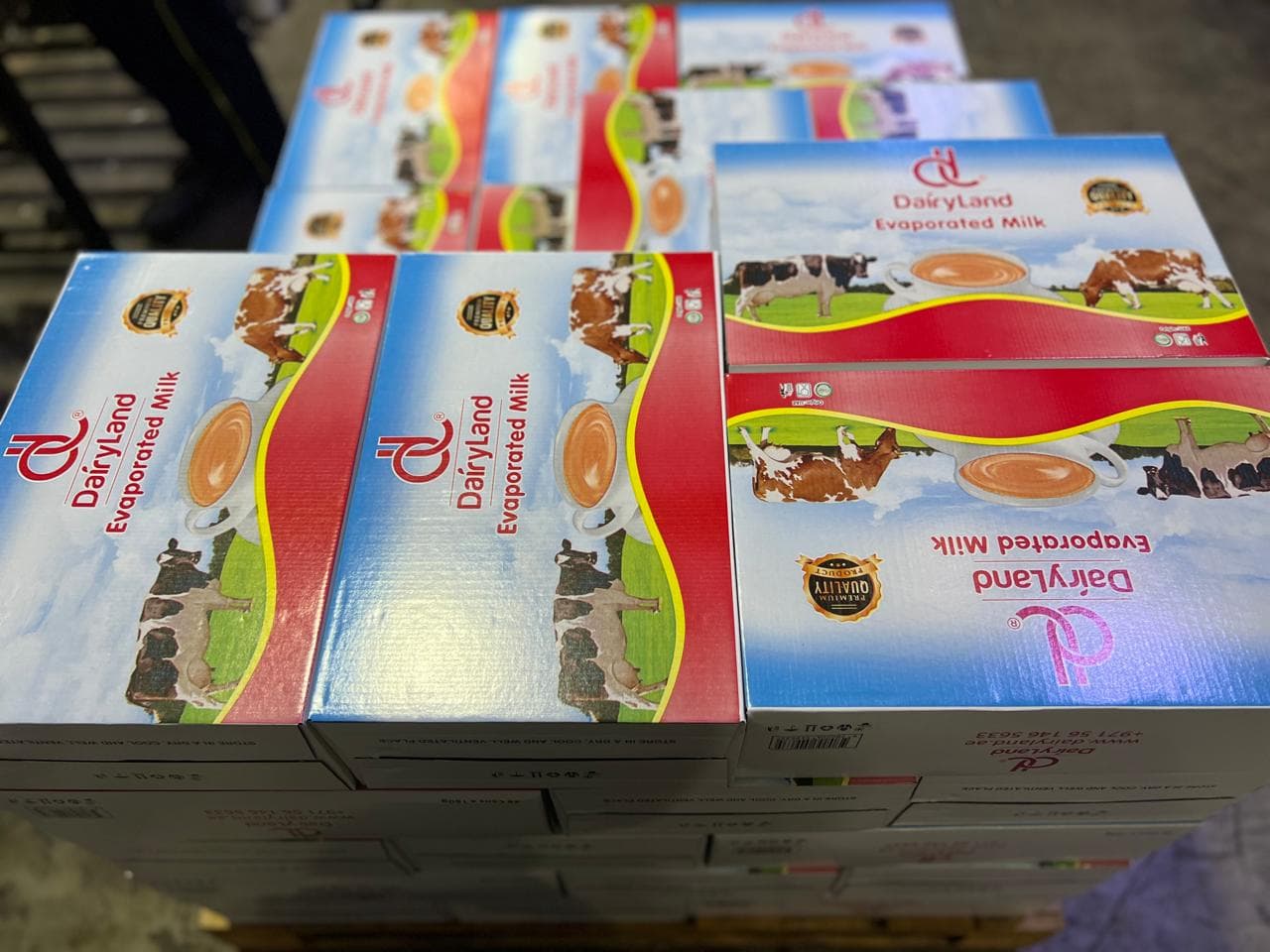
For suppliers, the practical implication is clear: shelf-stable formats — powder, evaporated milk, condensed milk — are not niche products here. They are the primary mode of dairy consumption for the urban majority.
Country-Level Signals: Nigeria, Ghana, and Côte d'Ivoire
These three markets each tell a distinct story.
Nigeria, with 237.5 million people, is the region's anchor market. Food imports reached USD 2.34 billion in 2025, averaging roughly USD 195 million per month, even as naira weakness contributed to a year-on-year decline from USD 2.53 billion in 2024. The key insight is that naira depreciation compresses USD-denominated import volumes but simultaneously strengthens demand for affordable, shelf-stable formats that offer caloric value at accessible price points — precisely the segment where evaporated milk and powder products are positioned. Urbanisation and dietary modernisation are accelerating this dynamic, shifting consumption toward packaged and processed goods.
Ghana (population 35.3 million) is growing faster as a dairy market than any other country in the region. Dairy products ranked third among Ghana's top growth import categories in 2024, with total consumer-oriented food imports reaching USD 1.68 billion that year. Ghana's imports of food and agricultural products rose 18% in 2025 and continued growing into 2026. Crucially, inflation has fallen sharply to approximately 3.7% and the cedi has stabilised, improving purchasing power and import predictability for buyers.
Côte d'Ivoire recorded GDP growth of 6.4% in 2025 and functions as a gateway to francophone West Africa via the Port of Abidjan. Together with Senegal and other CFA franc-pegged economies, it benefits from currency stability and inflation running at 3–4%, providing a more predictable import environment than naira-zone markets. As domestic retail capacity cannot meet demand through local production alone, import dependence in Côte d'Ivoire is structural and growing.
Currency Dynamics and the Demand for Affordability
Currency volatility remains the single most consequential operational variable for food importers across the region. West African inflation hit 23.7% in 2024, driven heavily by exchange-rate depreciation, though the picture in 2026 is more differentiated. Nigeria's inflation has moderated to approximately 15.93%, Ghana's has fallen dramatically, and CFA-zone countries remain broadly stable.
For importers and distributors, currency dynamics have a dual effect. On one hand, a weaker naira or cedi raises the landed cost of any USD-priced product. On the other, it reinforces consumer preference for high-value, affordable formats — tinned milk, powder, cooking oil — that stretch household budgets. The naira's relative weakness against the CFA franc has also stimulated informal cross-border food flows from Nigeria into neighbouring francophone markets, a factor worth monitoring for regional stock management.
Takeaway for Buyers and Distributors
West Africa's food import market is large, structurally import-dependent, and growing. The forces behind demand — population growth, urbanisation, domestic supply deficits, and retail modernisation — are durable and not contingent on short-term economic cycles. Currency volatility is real but manageable when product selection is aligned with consumer purchasing behaviour: shelf-stable dairy, cooking oil, grains, and canned goods consistently demonstrate resilience even in constrained currency environments. Importers and distributors who build reliable supply chains into this region now are positioning themselves in one of the world's most consequential food markets for the next decade.
Sources
- Report Name: Food Processing Ingredients Annual - 2026
- Report Name: Exporter Guide Annual -2026
- Report Name: Retail Foods Annual - 2025
- Growing dairy industry in Africa taps more investments as demand rises - Issuu
- Africa's Dairy Equation: More Milk, But More Imports, Too - Ecofin Agency
- 1 Voluntary Report
- West Africa Dairy Market Trends, Growth & Outlook to 2033
- African Agrifood Market Signals Surging Bullish at $97B
This article is market commentary prepared by the Dairy Land Research Team for general information only and does not constitute commercial, financial or trading advice.