
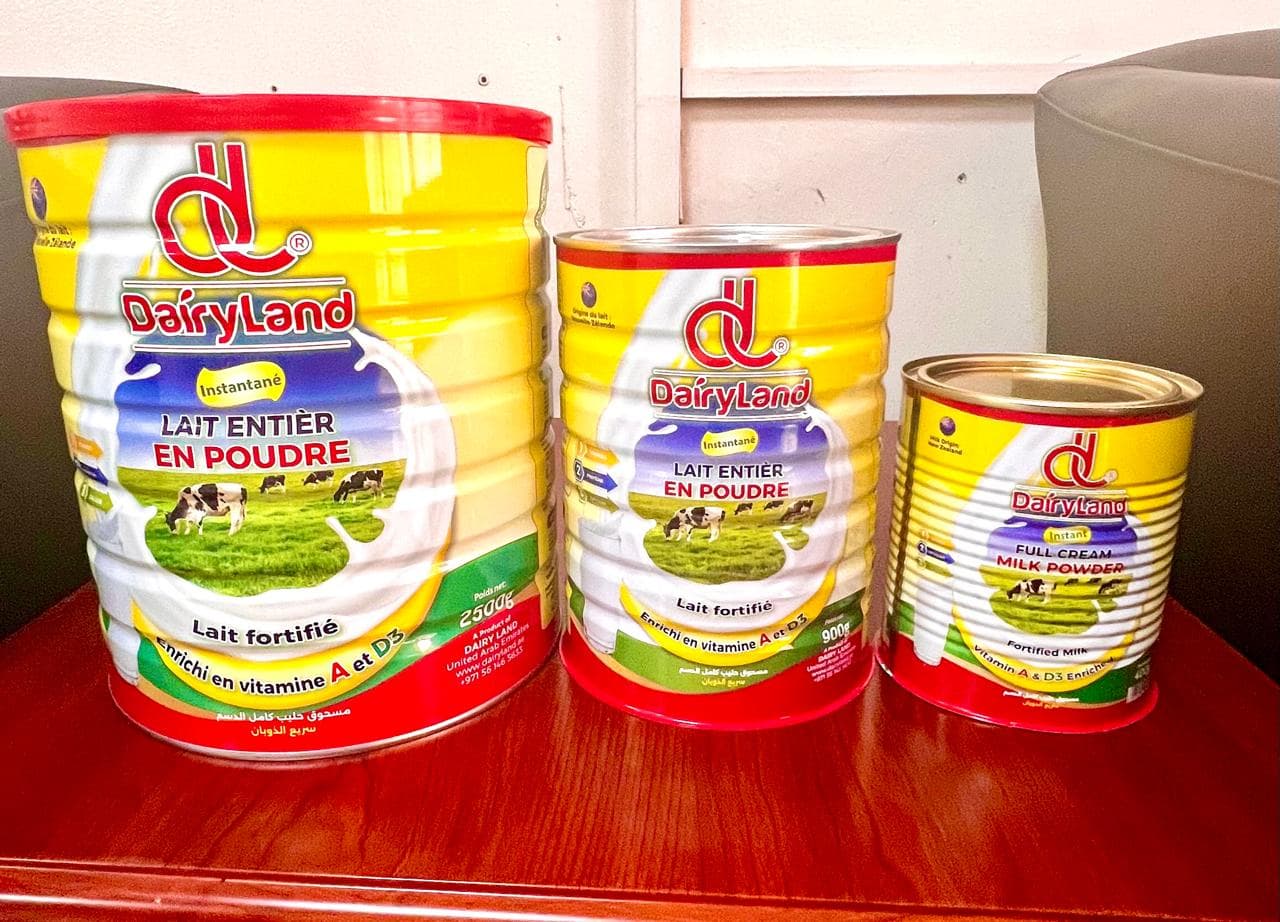
The global dairy market is entering a pivotal transition as 2026 draws to a close. After a year of robust milk production growth, the major exporting regions are collectively shifting gear — output is moderating, prices are sending mixed signals, and demand-side pressures are reshaping trade flows. For importers and distributors operating in the UAE and West Africa, understanding these dynamics now is essential for procurement planning and commercial positioning heading into early 2027.
Global Supply: From Abundance to Moderation
Global milk production is forecast to grow 2.2% across 2026 as a whole, a solid headline figure supported by strong output in all major dairy-producing regions. However, that momentum is visibly fading. Rabobank's Global Dairy Quarterly confirms that "Big 7" production growth is forecast to slow through H2 2026, with output expected to contract in Q4 and remain broadly flat into H1 2027. Ornua's October 2026 Market Report similarly projects growth decelerating to approximately 1% in 2027.
The three key export regions each tell a slightly different story. New Zealand is the headline performer, with milk production forecast to reach a record 22.5 million tonnes in 2026, driven by favourable farmgate prices, improved producer margins and modest herd expansion. Whole milk powder (WMP) output is forecast at 1.4 million tonnes, reinforcing New Zealand's dominant position in global powder markets. The caveat is El Niño: weather risk into Q1 2027 is a genuine downside concern that sourcing teams should track.
In the EU, processing strategy has shifted firmly toward higher-value products. Skim milk powder (SMP) production is forecast to climb to over 1.55 million tonnes — up around 64,000 tonnes year-on-year — while WMP output continues its structural decline, with exports also falling as Chinese demand softens and New Zealand becomes more price-competitive. Butter exports are recovering after a 2025 dip, and cheese and whey output remain on an upward trajectory.
In the US, the dairy herd reached its largest size since the mid-1990s through late 2025, generating supply that outpaced even the fast-growing domestic cheese sector. The resulting pressure on cream and butterfat prices has been significant. Rabobank expects US growth to continue at a more measured pace through H2 2026, bringing some rebalancing — but the sector remains well-supplied.
Commodity Prices: Volatile and Diverging
EU commodity prices as of week 42 (ending 18 October 2026) illustrate just how sharp the movements have been this cycle. Butter is trading at €401 per 100kg — up 55% year-on-year but already down sharply from its earlier peak. SMP stands at €337 per 100kg, also up 55% year-on-year, though it had fallen to €300 per 100kg as recently as late August before recovering. WMP is more stable at €390 per 100kg, up approximately 5% year-on-year.
For Q4, a further significant price rally looks unlikely. Strong milk availability, moderating demand growth and increasing consumer price sensitivity in key markets all point toward a more balanced supply-and-demand environment. The more constructive price outlook is building for milk powders and dairy proteins into 2027, as supply growth slows and weather risks materialise — a dynamic worth watching for those managing longer procurement cycles.
West Africa: Structurally Resilient, Operationally Challenging
Africa's dependence on dairy imports is deepening. Milk powder, fat-filled milk powder and infant formula account for 76% of the continent's dairy imports, and Africa's own production base — despite growing 17% over the past decade to around 53 million tonnes — still represents only about 5% of global output. The structural demand gap is not closing quickly.
Benchmark import prices for powdered, condensed and evaporated milk in West Africa reached approximately $1,994 per tonne in 2024, well below the 2022–23 peaks — yet retail prices continue to climb. In Nigeria, the average retail price of a 150g tin of evaporated milk rose more than 6% between February and April 2026 alone, reflecting the severe pass-through effects of currency depreciation in both Nigeria and Ghana. Layered tariff structures and non-tariff barriers compound these pressures.
Freight costs remain a persistent burden. Red Sea routing diversions have not meaningfully normalised for shipments originating east of Suez, and there is little indication they will do so in the near term — keeping landed costs elevated and making origin flexibility and routing strategy a competitive differentiator.
Takeaway for Importers and Distributors
The convergence of slowing global supply growth, volatile commodity prices and structurally rising — but operationally constrained — West African demand creates a market environment that rewards careful planning. SMP and WMP pricing dynamics are likely to firm into 2027 as New Zealand weather risks and moderating EU and US output reduce the supply cushion. Importers managing dairy powder inventories should consider whether current price levels represent a window before tighter conditions emerge. At the same time, currency risk and freight cost management remain the dominant variables for West African trade economics — and are likely to stay that way through the first half of next year.
Sources
- Milk - 2026 Agri-Commodity Markets Outlook Global (U)
- DAIRY MARKET NEWS MMN Slug ID 2998 DAIRY MARKET NEWS AT A GLANCE
- Dairy market outlook
- Q4 Rabobank update
- Global Dairy Quarterly - Rabobank
- Dairy: World Markets and Trade U.S. Milkfats Exports to Churn Out New Records
- Global dairy costs squeeze supply outlook - IN Food
- Global Milk Production Forecast to Grow 2.2% in 2026 - Dairy Industry Expo
This article is market commentary prepared by the Dairy Land Research Team for general information only and does not constitute commercial, financial or trading advice.