
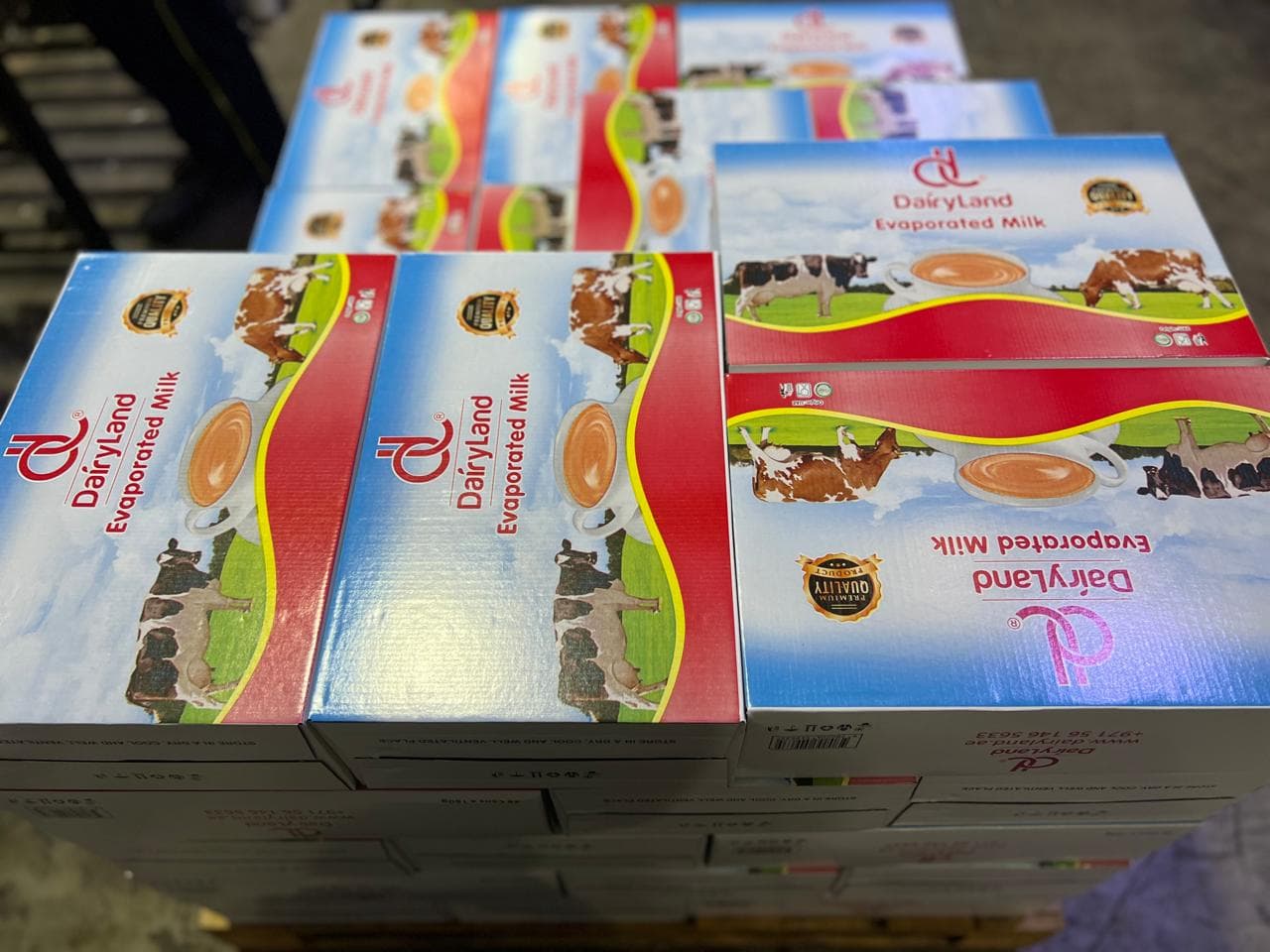
West Africa's food and dairy import landscape is shifting quickly. A region of more than 450 million people, expanding urban middle classes, and chronically under-developed local dairy supply chains continues to generate deep, durable demand for imported milk powder, evaporated milk, and processed food ingredients. For suppliers and distributors, however, the opportunity is not uniform — Nigeria, Ghana, and Côte d'Ivoire are moving in materially different directions on currency, growth, and product mix.
A Market Anchored by Structural Import Dependence
The West Africa dairy market was valued at USD 3.05 billion in 2025 and is projected to reach USD 3.69 billion by 2033, growing at a CAGR of 2.40%. That steady trajectory is underpinned by a structural reality: approximately 80% of Africa's dairy consumption growth is met by imported products and reconstituted powders, not expanded local production, according to the FAO's November 2025 Africa Food Security Report. Even large processors that dominate local retail — companies controlling the majority of Nigeria's dairy market — source virtually no domestic milk, instead importing powder from Europe for local reconstitution. This dynamic keeps import channels central to the market regardless of industrial investment trends.
Milk powder, both whole milk powder (WMP) and fat-filled milk powder (FFMP), dominates the product mix. Its long shelf life, ease of transportation, and dual use in household consumption and food manufacturing make it the region's core dairy import. Nigeria alone imports an estimated 100,000–130,000 metric tonnes of WMP annually — roughly 20–25% of continental total imports — and accounts for an estimated 25–30% of regional FFMP consumption. Nigeria, Ghana, and Côte d'Ivoire together represent 35–40% of African WMP imports. Nigeria's WMP demand is forecast to grow at 5–7% CAGR through 2035, supported by a population exceeding 220 million and accelerating urbanisation.
Nigeria: The Dominant Market, With Real Cost Pressures
Nigeria held a 37.92% share of the regional dairy market in 2025 and remains the single largest destination for West African food imports. The country produces an estimated 527,000 tonnes of milk domestically but imports approximately 927,000 tonnes — meaning imports account for roughly 64% of available supply. The government has acknowledged an estimated USD 1.5 billion annual dairy import bill and is seeking private investment to reduce it, though no structural change to import volumes is imminent.
For importers and distributors, the demand signal is clear. The average retail price of a 150g tin of evaporated milk in Nigeria rose 6.13% in just two months (February to April 2026), reflecting both real consumer demand and inflationary pass-through. Nigeria's headline CPI stood at 15.69% in April 2026, with the IMF estimating 16.0% for the full year — elevated, but moderating. Food inflation fell for a fifth consecutive month as of November 2025. On currency, the naira showed notable resilience in Q2 2026, with a maximum depreciation of only 2.6%, which the World Bank identified as Africa's best currency performance in that quarter. The core challenge remains layered: 15–20% import duties, periodic foreign-exchange shortages, and port congestion in Lagos add cost and complexity for trade partners.
Ghana and Côte d'Ivoire: Contrasting Dynamics, Shared Growth
Ghana is forecast to record the highest CAGR within the West Africa dairy market, driven by a nearly 60% urbanisation rate, a growing middle class, and rising demand for packaged and value-added dairy. GDP grew 6% in 2025 and is projected at 4.8–5.9% in 2026. Food and agricultural imports for January–April 2026 reached USD 64 million, up 16.5% year-on-year, with consumer-oriented products the fastest-growing category. The critical risk factor is the cedi, which after an extraordinary appreciation of more than 40% in 2025 — its first annual gain in nearly 33 years — reversed course in 2026 and depreciated approximately 10.28% year-to-date by mid-year. Import-dependent buyers face structurally higher local-currency costs, compressing margins and complicating forward planning.
Côte d'Ivoire presents a compelling complementary opportunity. With GDP growth forecast at 6.4% in 2026 — among the strongest on the continent — and 60% of its 32.7 million people under the age of 25, the structural demand base is substantial. USDA GAIN data ranks dairy products as the number-one growth category for the market, with specific opportunities in milk concentrates, powder, and bakery inputs. Critically, Abidjan serves as a re-export gateway to landlocked francophone neighbours including Burkina Faso, Mali, and Niger, extending the effective reach of any distribution presence established in-country.
Takeaway for Trade Partners
The fundamentals across West Africa remain firmly positive: population growth, urbanisation, rising incomes driving the "protein escalator" shift toward dairy, and a supply gap that cannot be closed by local production in the near term. The nuance lies in execution. Nigeria offers volume but demands tariff and logistics planning. Ghana offers growth momentum but requires careful currency risk management. Côte d'Ivoire offers a stable, fast-growing entry point with regional distribution leverage. Suppliers and distributors who understand each market's distinct cost and regulatory environment will be best positioned to capture the growth ahead.
Sources
- Usda
- Report Name: Exporter Guide Annual -2026
- West Africa Import Outlook Mid-2026: What Dairy, Fish, Tomato Paste and Oil Buyers Need to Know
- Why African Dairy’s $74B Boom Bypasses Local Farmers
- African Agrifood Market Signals Surging Bullish at $97B
- Africa’s Dairy Import Bill Rises as Local Production Struggles to Meet Demand
- West Africa Dairy Market Trends, Growth & Outlook to 2033
- Africa Animal Protein Market Size & Share Outlook to 2031
This article is market commentary prepared by the Dairy Land Research Team for general information only and does not constitute commercial, financial or trading advice.